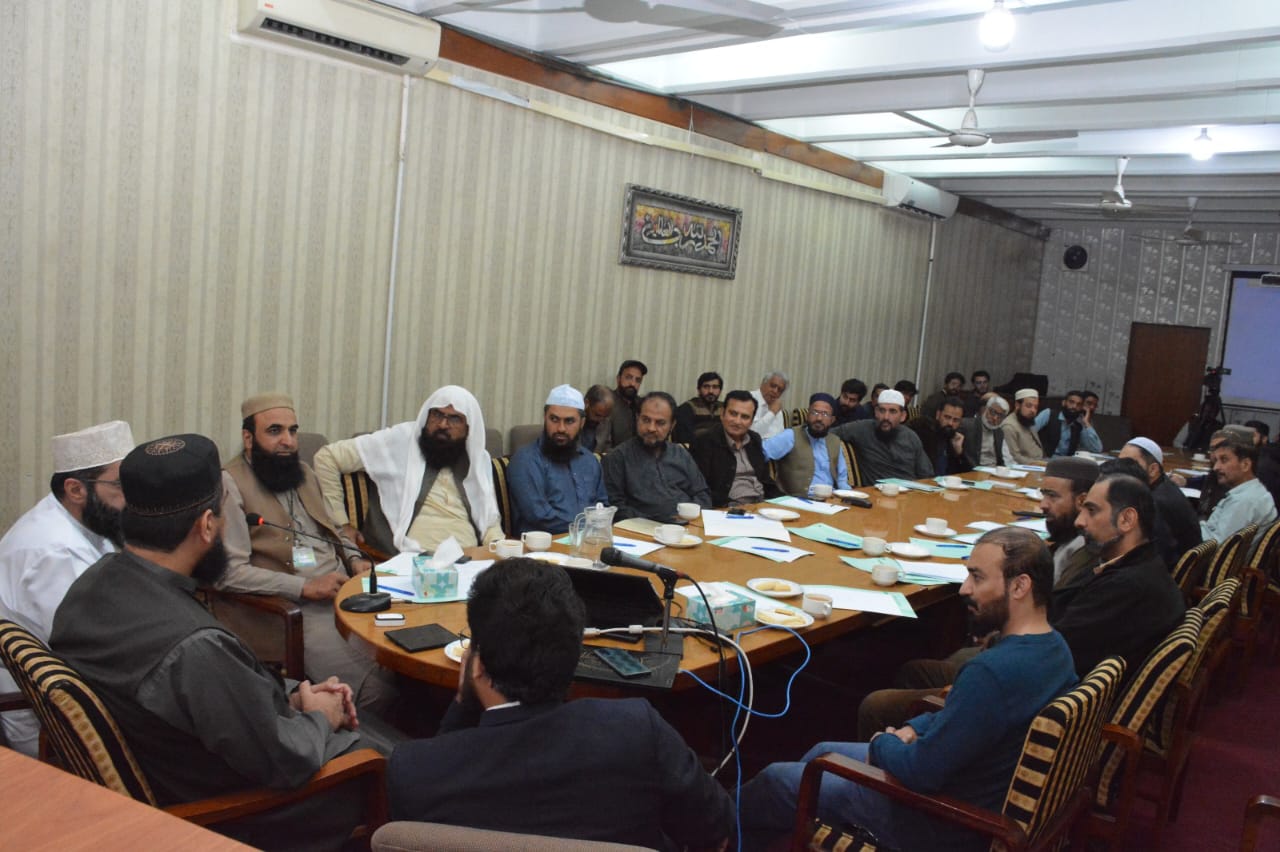
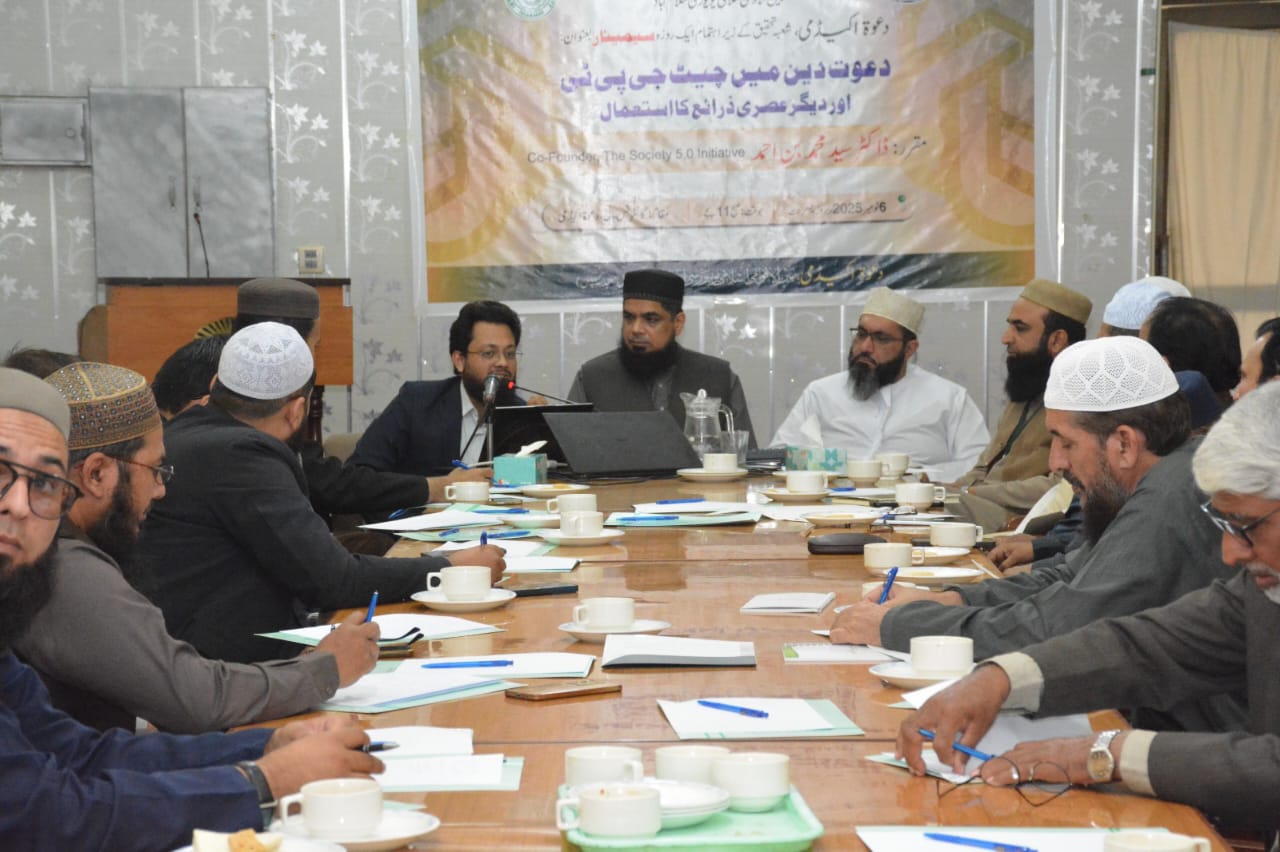
The Research Department of Dawah Academy, International Islamic University Islamabad (IIUI), organized a one-day seminar titled “Use of ChatGPT and Other Contemporary Tools in Dawah”. The session was presided over by Prof. Dr. Muhammad Ilyas, Director General of Dawah Academy, while Dr. Syed Muhammad bin Ahmed, Co-Founder of The Society 5.0 Initiative, was the keynote speaker.
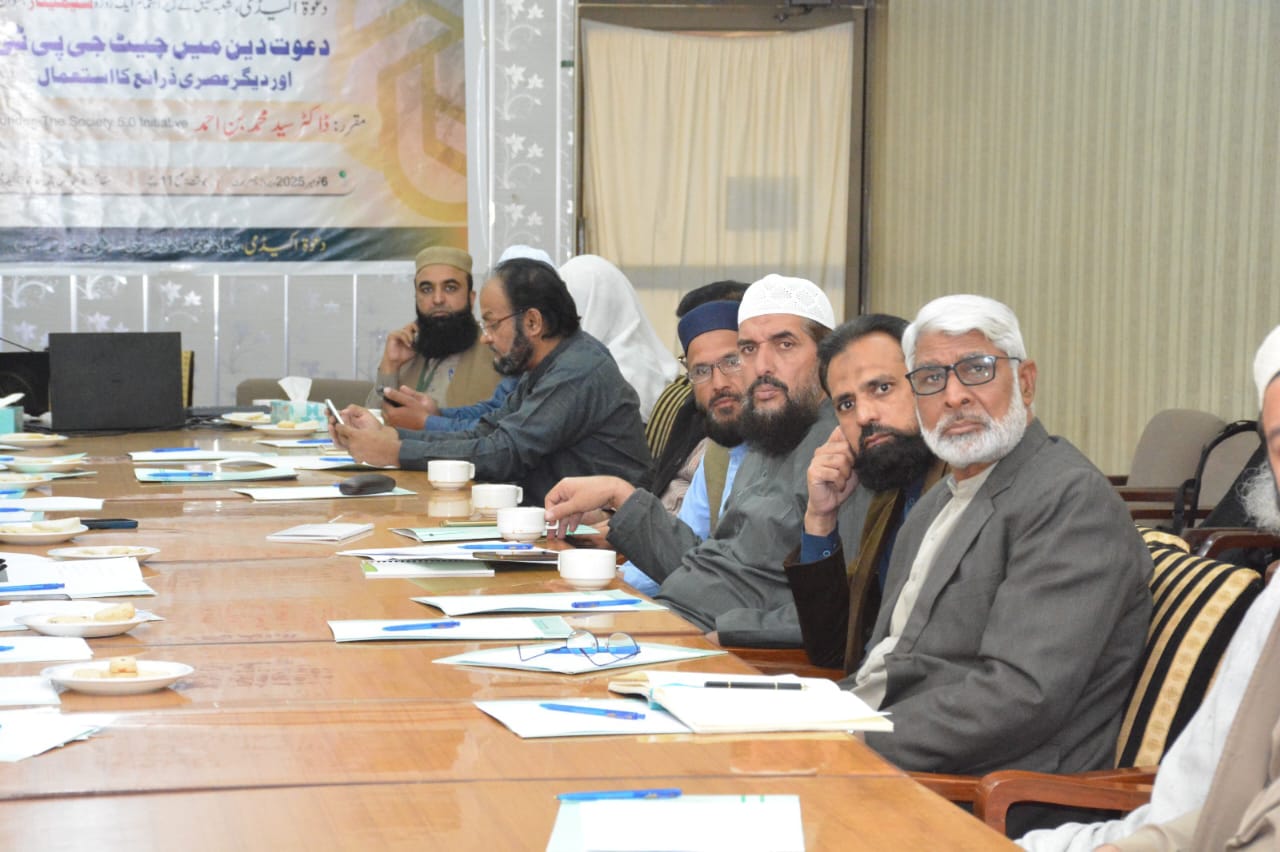
The event was attended by scholars, imams, khateebs, university faculty members, students, and officers of Dawah Academy.
In his address, Dr. Syed Muhammad bin Ahmed highlighted that Artificial Intelligence (AI) is not a teacher but an assistant to humans. He noted that over 150 million people around the world are currently using AI technologies, saving nearly 30 to 40 percent of time and effort in various fields. He said that while several tools existed before the launch of ChatGPT in 2022, this technology has opened new avenues in the areas of dawah, education, and research.
He emphasized that AI can support philosophical inquiry, help new Muslims understand Islam, assist in sermon preparation, and offer solutions to contemporary challenges. However, he cautioned that AI should not be treated as an authority but only as a supporting tool. Dr. Syed Muhammed bin Ahmed further warned that since AI lacks accountability, it may sometimes generate fabricated or inaccurate information that appears authentic. Therefore, users must verify and cross-check the information produced by AI.
During the session, participants were given a practical exercise to verify a Hadith from Sunnah.com and compare it with ChatGPT’s response — an activity that proved insightful and engaging.
In his presidential remarks, Prof. Dr. Muhammad Ilyas stated that humanity stands at a crossroads — reaching new heights of artificial intelligence while many still struggle for basic necessities like water. He observed that AI, despite its vast potential, remains indifferent to moral and spiritual dimensions. He stressed the need to integrate ethics and faith with technological progress.
Commending the efforts of the Research Department, Dr. Ilyas said such academic initiatives are essential to develop effective methods of dawah aligned with contemporary needs.
At the end of the program, a copy of the Holy Qur’an was presented to the guest speaker as a token of appreciation. The session was moderated by Dr. Muhammad Ahmad Zubairi, In-charge of the Research Department.