

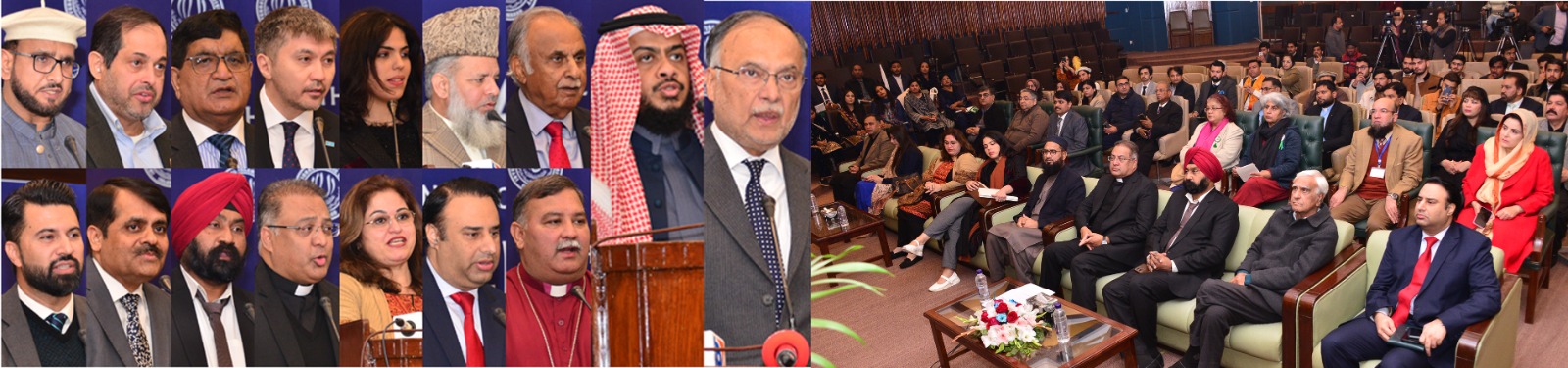
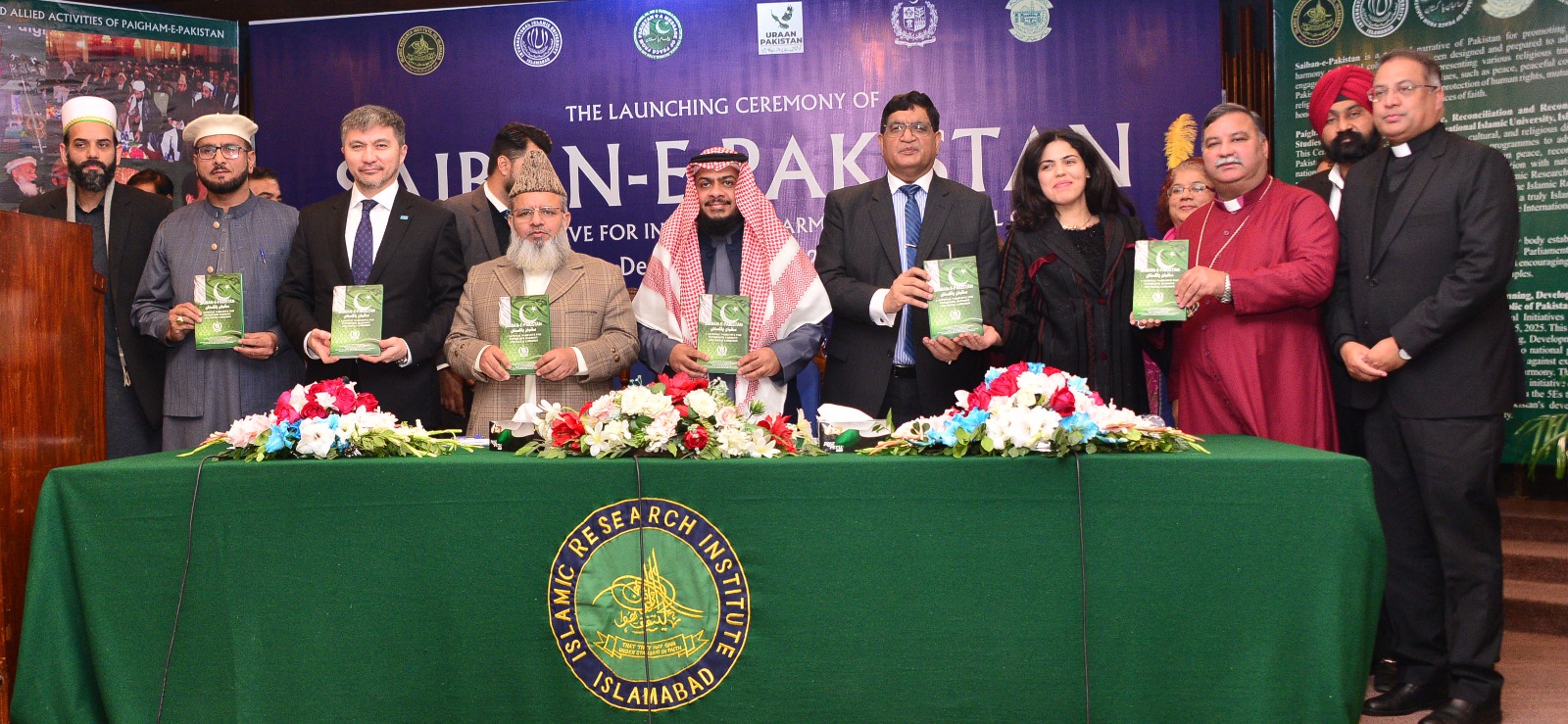
 The Paigham-e-Pakistan Centre for Peace, Reconciliation and Reconstruction Studies of the Islamic Research Institute (IRI), International Islamic University Islamabad (IIUI), in collaboration with the Council of Islamic Ideology (CII) and the Ministry of Planning, Development and Special Initiatives, on Tuesday formally launched “Saiban-e-Pakistan”, a national narrative aimed at strengthening interfaith harmony, social cohesion and national unity.
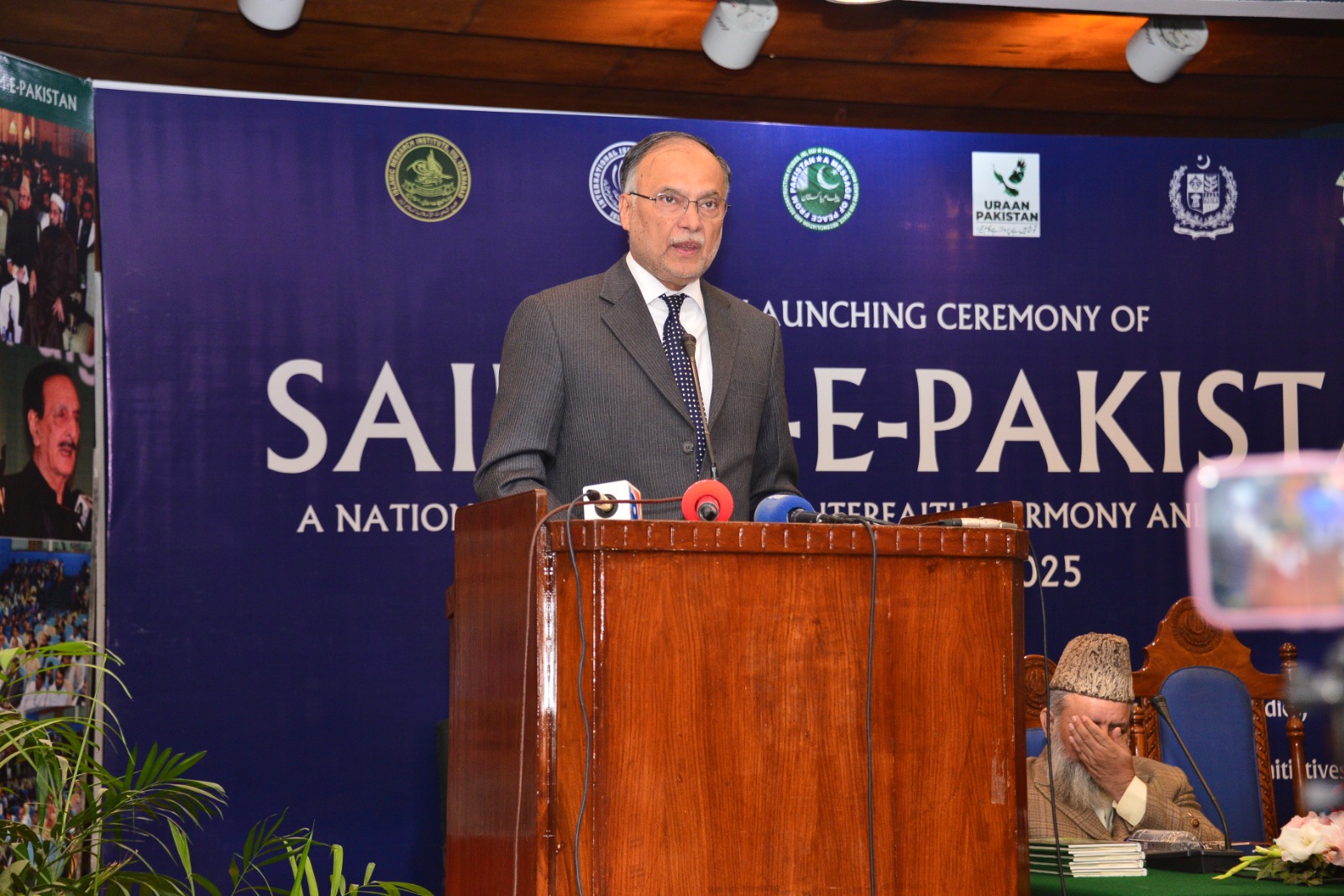 Federal Minister for Planning, Development and Special Initiatives Prof. Ahsan Iqbal was the Chief Guest on the occasion. Addressing the ceremony, he described Saiban-e-Pakistan as a symbolic and practical protective umbrella for all citizens of the country.
 He emphasized that national cohesion can only be ensured through inclusive narratives that guarantee equal rights, dignity and security for every Pakistani, regardless of faith or background.
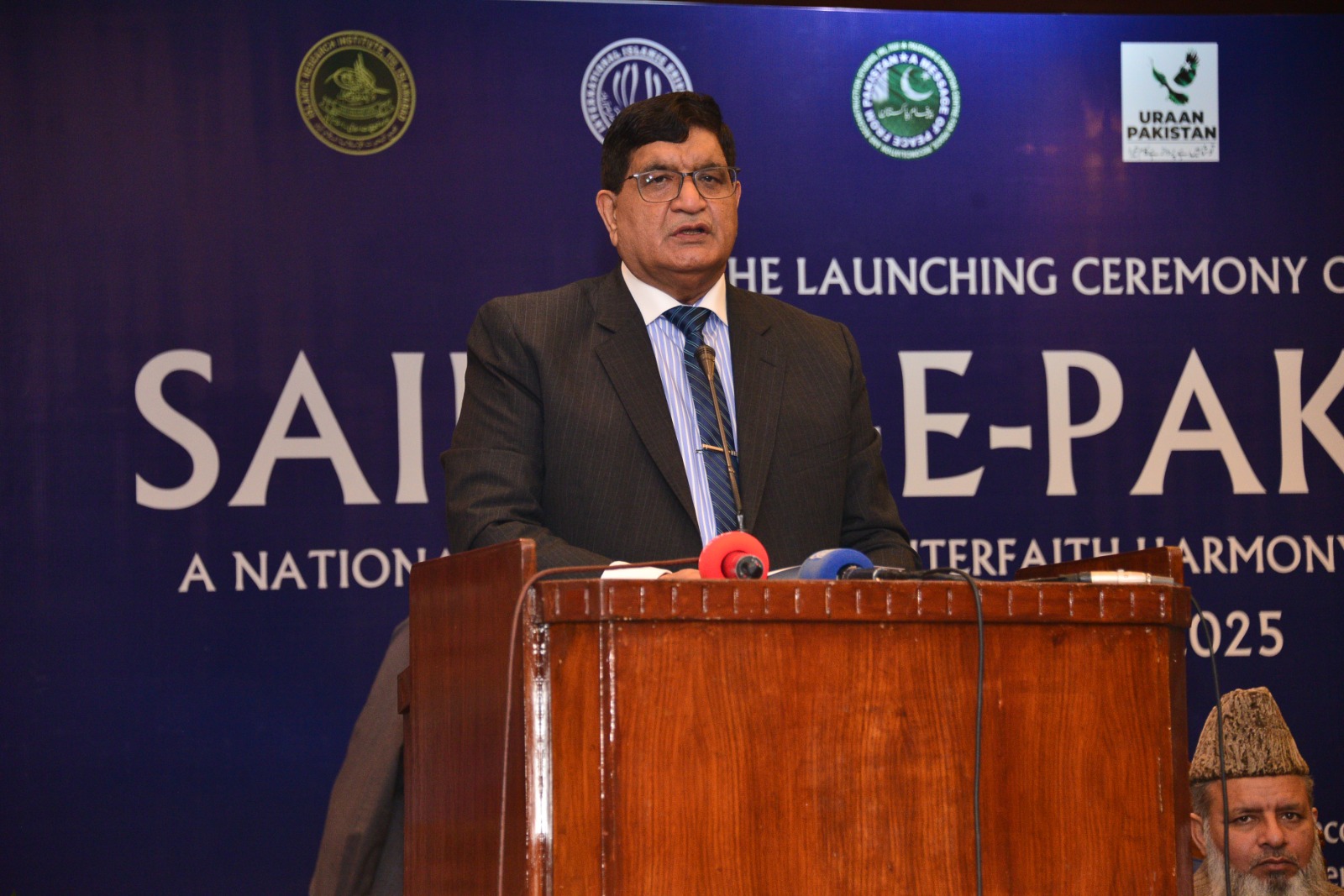 He lauded IIUI and the Islamic Research Institute for providing the intellectual and moral foundations necessary for sustainable national integration.
Reflecting Pakistan’s pluralistic spirit, Bishop Nadeem Kamran, Bishop of Lahore, Church of Pakistan, attended the event as Guest of Honour. In his address, he underscored the collective responsibility of religious leadership in promoting peace, mutual respect and social harmony.
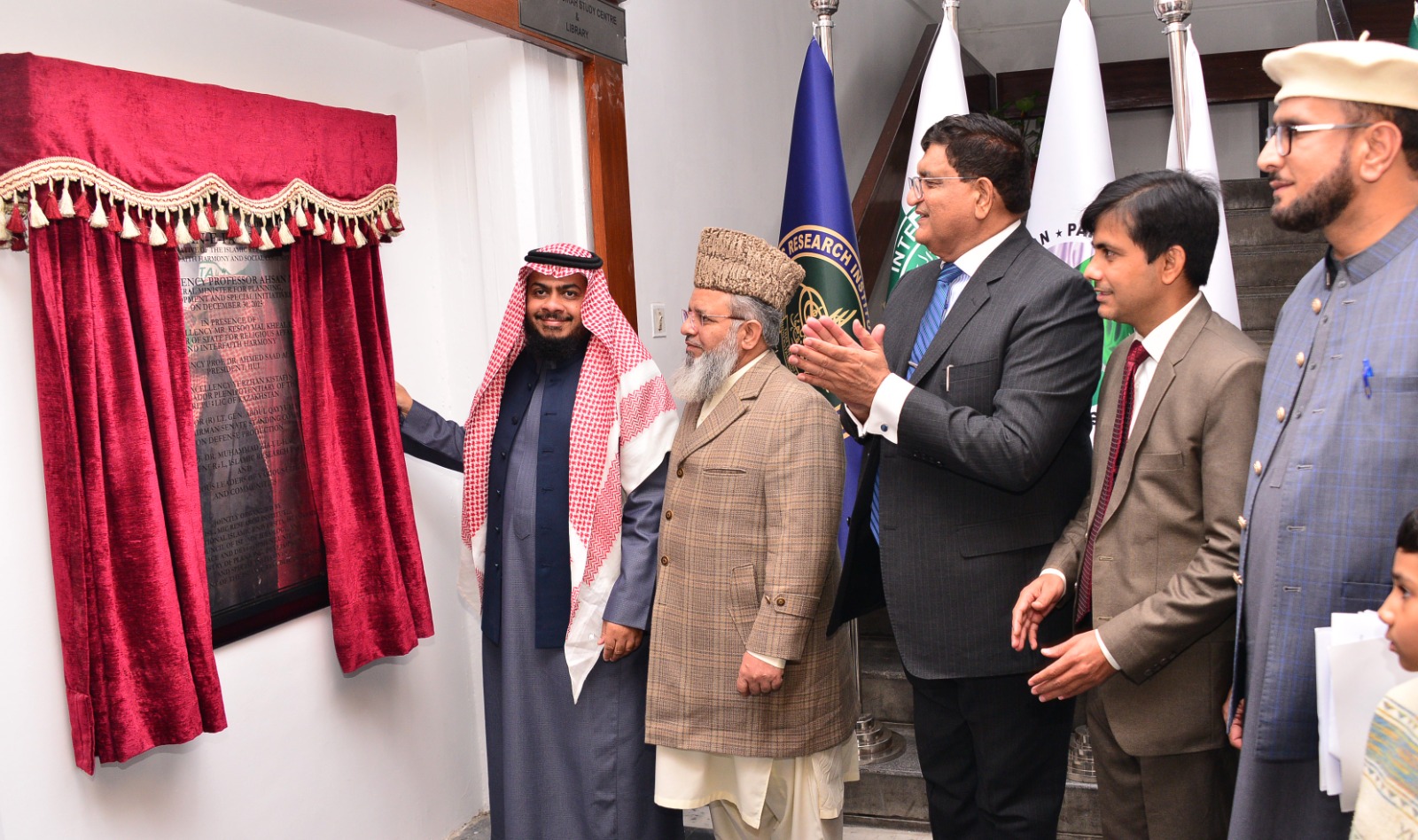 The seminar featured deliberations by eminent religious scholars, parliamentarians and community representatives, including Dr. Allama Raghib Hussain Naeemi, Chairman, Council of Islamic Ideology; Prof. Dr. Muhammad Zia-ul-Haq, Director General, Islamic Research Institute (IRI, IIUI); Ms. Shagoofa Jamal, representing the Bahai’ community; Mr. Isphanyar M. Bhandara (MNA) from the Parsi community; Mr. Ranjeet Singh, former MPA, representing the Sikh community; Sher Majam, President, Pakistan Kalash Council; and Father Asif John, Vicar General, Roman Catholic Diocese. The speakers stressed the importance of dialogue, constitutional harmony and shared responsibility in countering extremism and social polarization.
 The event also witnessed diplomatic participation, with addresses by H.E. Yerzhan Kistafin, Ambassador of Kazakhstan, and H.E. Dorsaf Maaroufi, Chargé d’Affairs of Tunisia. The diplomats appreciated Pakistan’s intellectual initiatives in promoting peace narratives and combating extremism through scholarly engagement.
Senator (R) Lt Gen Abdul Qayyum shared his views on national security, societal resilience and the role of inclusive narratives in strengthening the state.
The proceedings were moderated by Dr. Hafiz Aftab Ahmad, Head of the Department of Comparative Study of World Religions, IIUI. In his concluding remarks, he said that Saiban-e-Pakistan is not merely a policy document but a research-based intellectual framework grounded in dialogue, constitutional values and interfaith understanding.
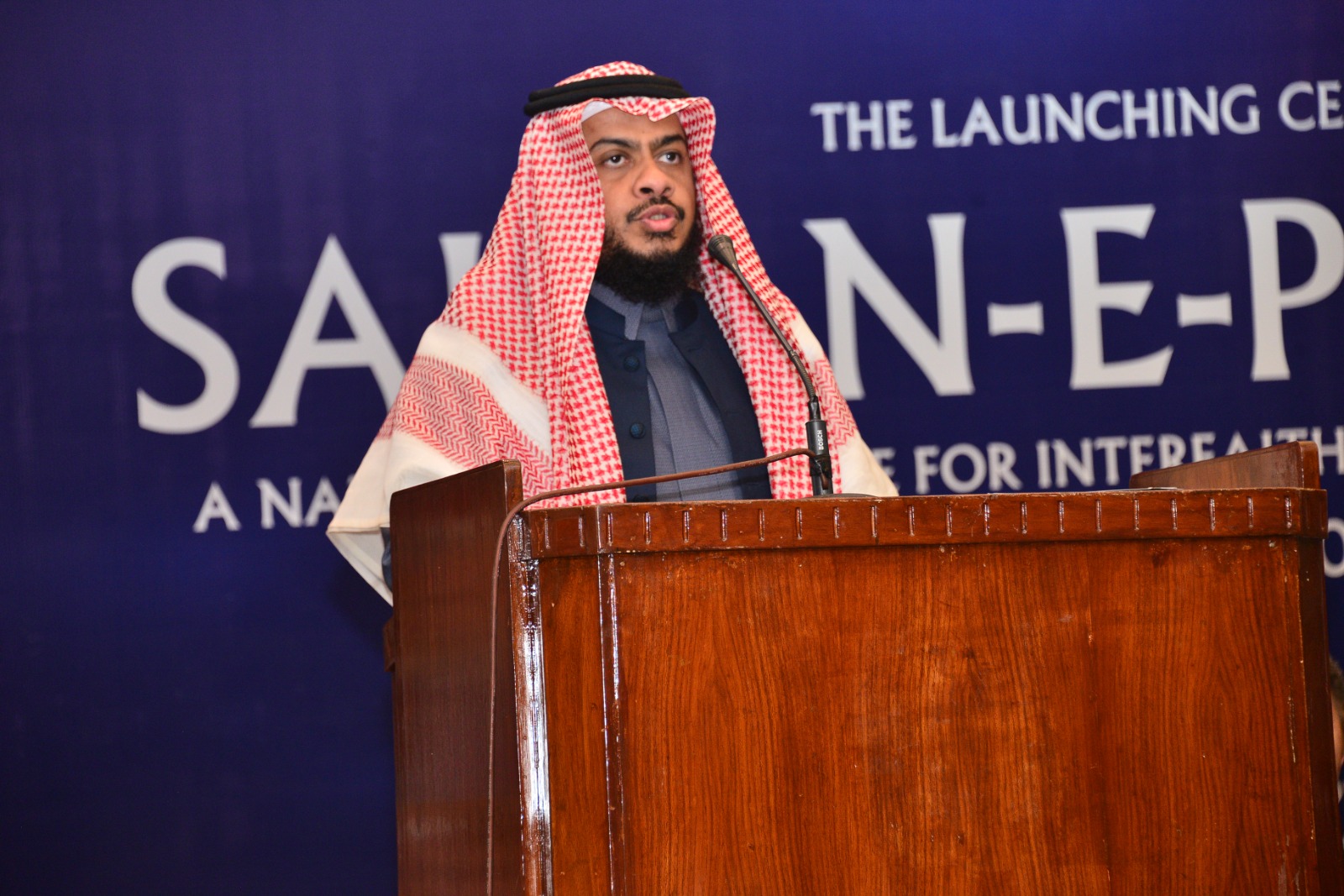
In his vote of thanks, Prof. Dr. Ahmed Saad Alahmed, President, IIUI, reaffirmed the university’s commitment to serving as a global centre for moderate Islamic thought, intellectual discourse and cultural bridge-building. The ceremony concluded with the distribution of souvenirs among distinguished guests and participants.