

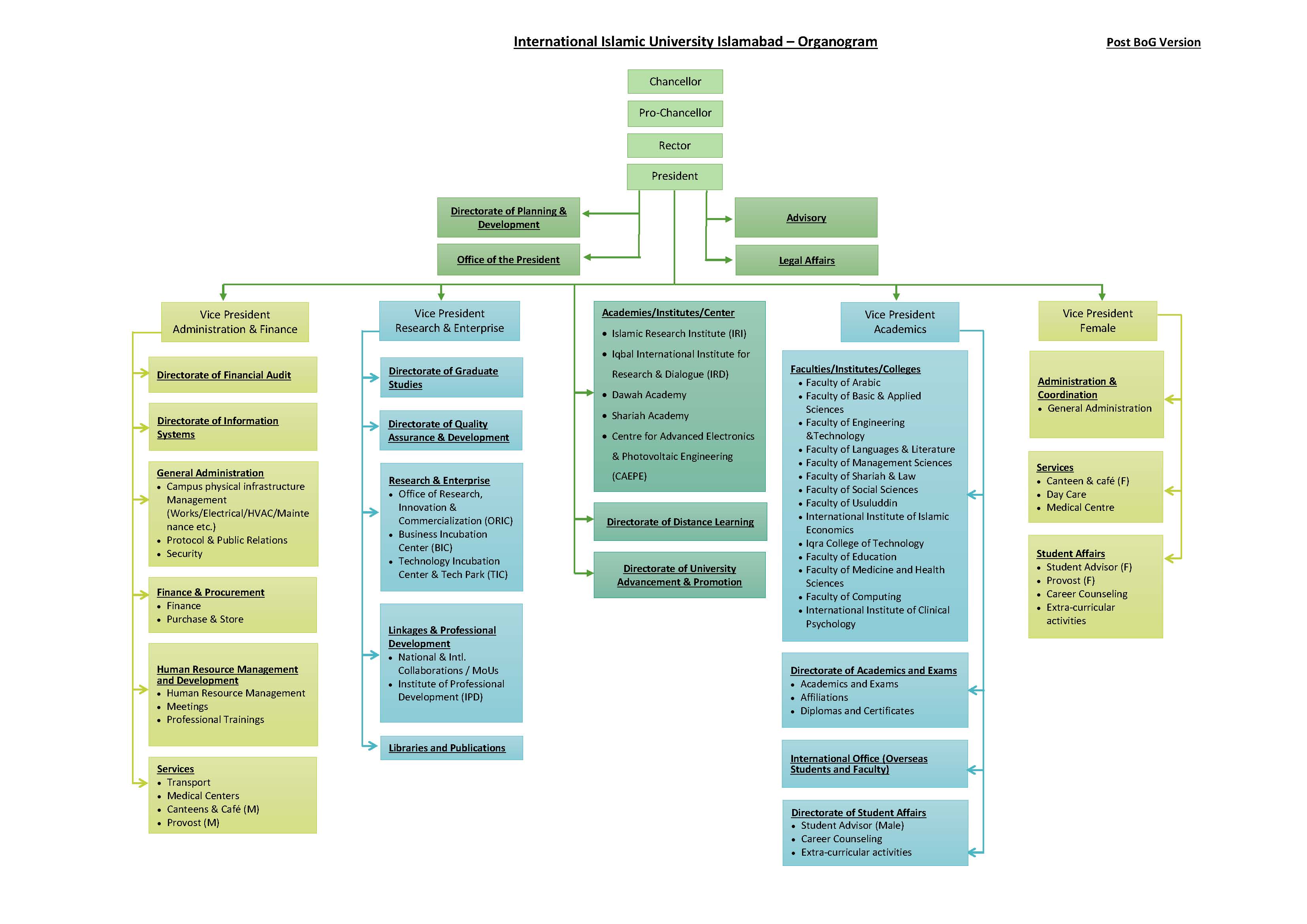
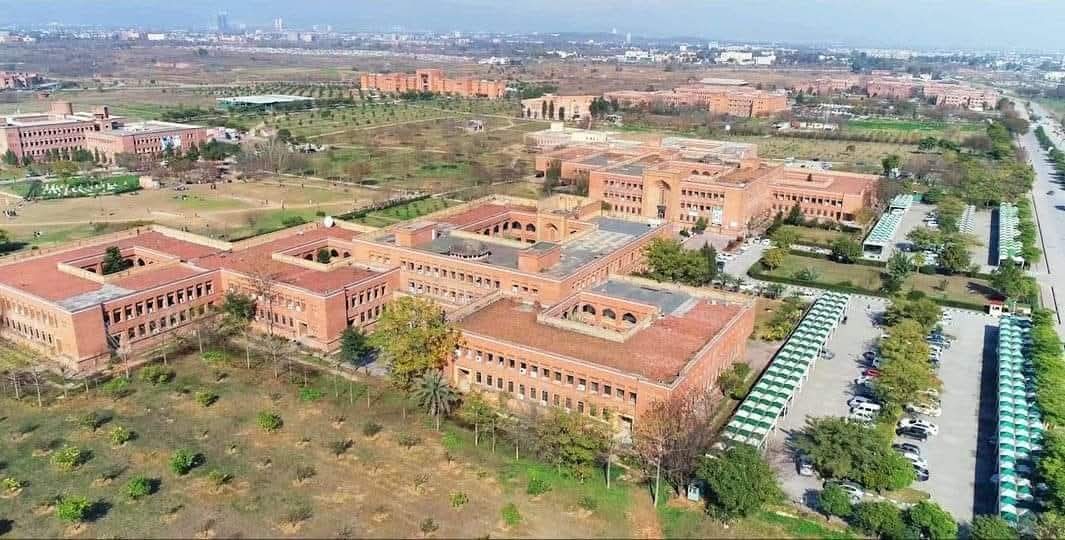
 Iqbal International Institute of Research and Dialogue (IRD) Advisory Committee has finalized a comprehensive agenda for the year 2025, introducing key themes aimed at academic, cultural, and social development.
The committee is headed by Prof. Dr. Ahmed Shuja Syed, President IIUI. Its members include
Prof. Dr. Amna Mahmood, Incharge (Female Campus),
Dr. Qaiser Shahzad, Associate Professor, Faculty of Usuluddin,
Dr. Rabia Ali, Associate Professor (Sociology), IIUI, Dr. Hafiz Abid Masood, Assistant Professor (English), Dr. Muhammad Junaid Ghauri, Lecturer (DMCS), IIUI, Mr. Nasir Farid, Additional Director-IRD, IIUI and Dr. Maryam Siddiqa and Assistant Professor, PS&IR, IIUI.
The President of the International Islamic University Islamabad (IIUI) has formally approved the recommendations of the committee, paving the way for a series of initiatives that will have far-reaching impacts in academia and beyond.
A major highlight of the approved agenda is the long-term initiative to commemorate the 100th anniversary of Allama Iqbal in 2038. This ambitious project is set to follow the model of Shakespeare’s 500th birth anniversary celebrations in Europe, with extensive national and international engagements.
The initiative includes hosting conferences, events across Pakistan and internationally, and a concerted effort to translate Iqbal’s works into multiple languages. Additionally, efforts will be made to collect and preserve Iqbal’s published works from global libraries to ensure broader accessibility.
Another key initiative focuses on proactive conflict resolution strategies for Pakistan, emphasizing national cohesion. Under this program, students from Sindh, Balochistan, and other provinces will be invited to Islamabad, while scholars from the capital will visit these regions to foster understanding and unity. Documentary productions highlighting Pakistan’s cultural and social diversity will support these efforts. Additionally, literary works from Sindh, Balochistan, and Khyber-Pakhtunkhwa will be translated and disseminated across other provinces to promote a shared cultural and national identity. The initiative will also include visits by religious scholars from different sects to promote inter-sectarian harmony, addressing sectarian tensions that impact national unity.
A research-based initiative titled “Year Work in Disciplines” has also been introduced, focusing initially on monitoring the academic progress of selected disciplines such as sociology, psychology, and politics & international relations. This project aims to analyze career pathways of graduates from 2008 to 2024, tracking student and faculty growth and other key metrics to inform future academic strategies.
Further broadening its academic scope, IIUI has approved a project on Pakistan-Africa relations from a socio-cultural and literary perspective. Recognizing Africa’s growing economic and social development, this initiative seeks to foster research collaborations between Pakistan and African academic institutions. Planned activities include joint conferences and scholar exchange programs to build stronger academic and cultural ties.
The IRD is also set to launch a post-doctoral program in 2025, with a working paper outlining the program’s structure, funding sources, and implementation plan expected soon. The program aims to provide advanced research opportunities, reinforcing IIUI’s commitment to academic excellence.
In addition to these five themes, the President of IIUI has approved the establishment of IRD Publication Corners in selected colleges, universities, madrassas, and prominent libraries across Pakistan. This initiative aims to enhance research accessibility and academic resource sharing.
Two major academic events have also been scheduled for 2025. A specialized workshop on Research Methodology in Social Sciences is planned for February 18-28, catering to scholars and researchers seeking to enhance their methodological expertise. Furthermore, a two-day international conference on “Islam and the West: Barriers and Bridges” will be held in April, providing a platform for scholarly discussions on the complex relationship between Islamic and Western societies.
These initiatives underscore the IIUI’s commitment to build academic excellence, national cohesion, and global academic collaboration, setting the stage for a transformative year in research and education.