

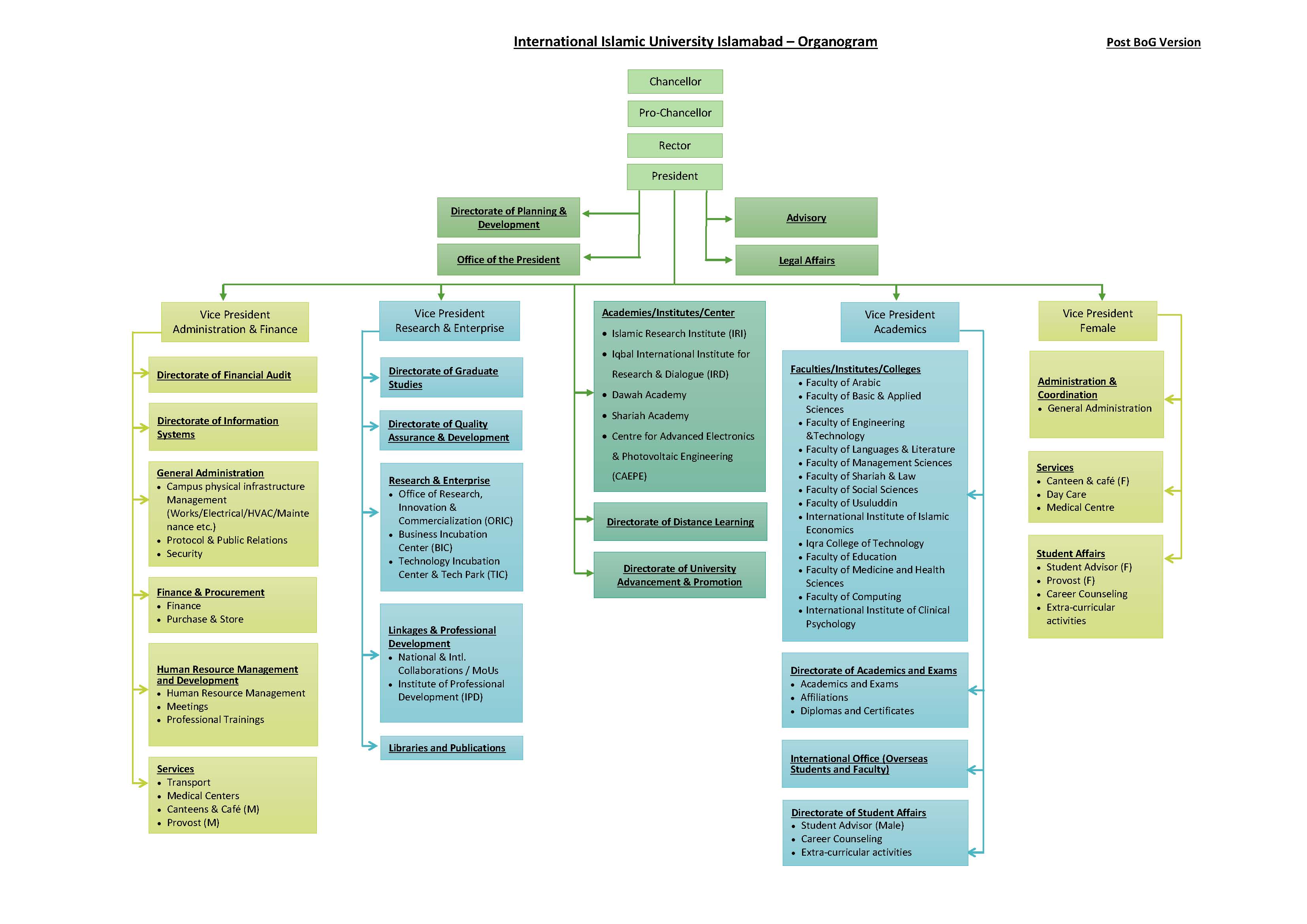
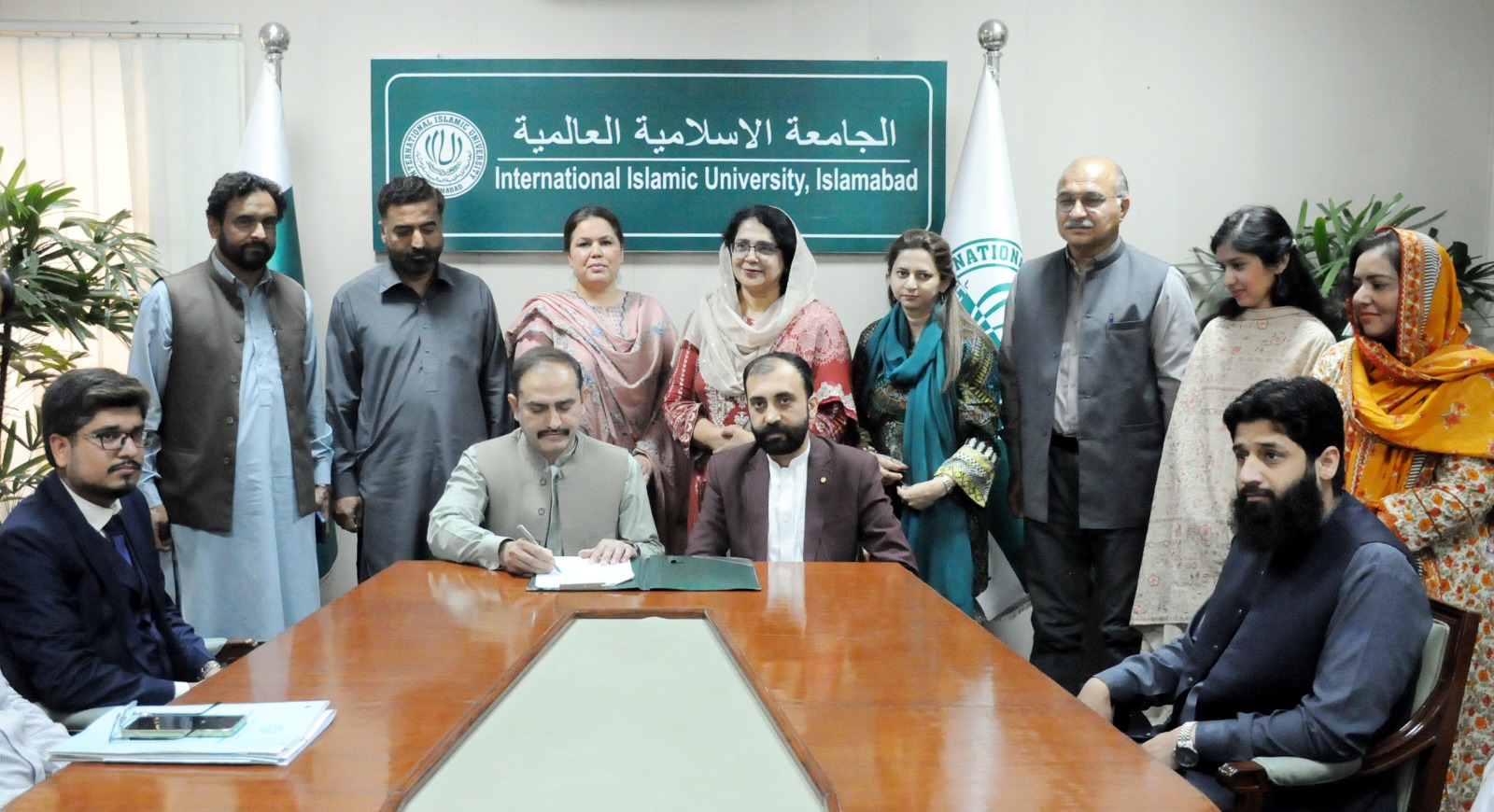
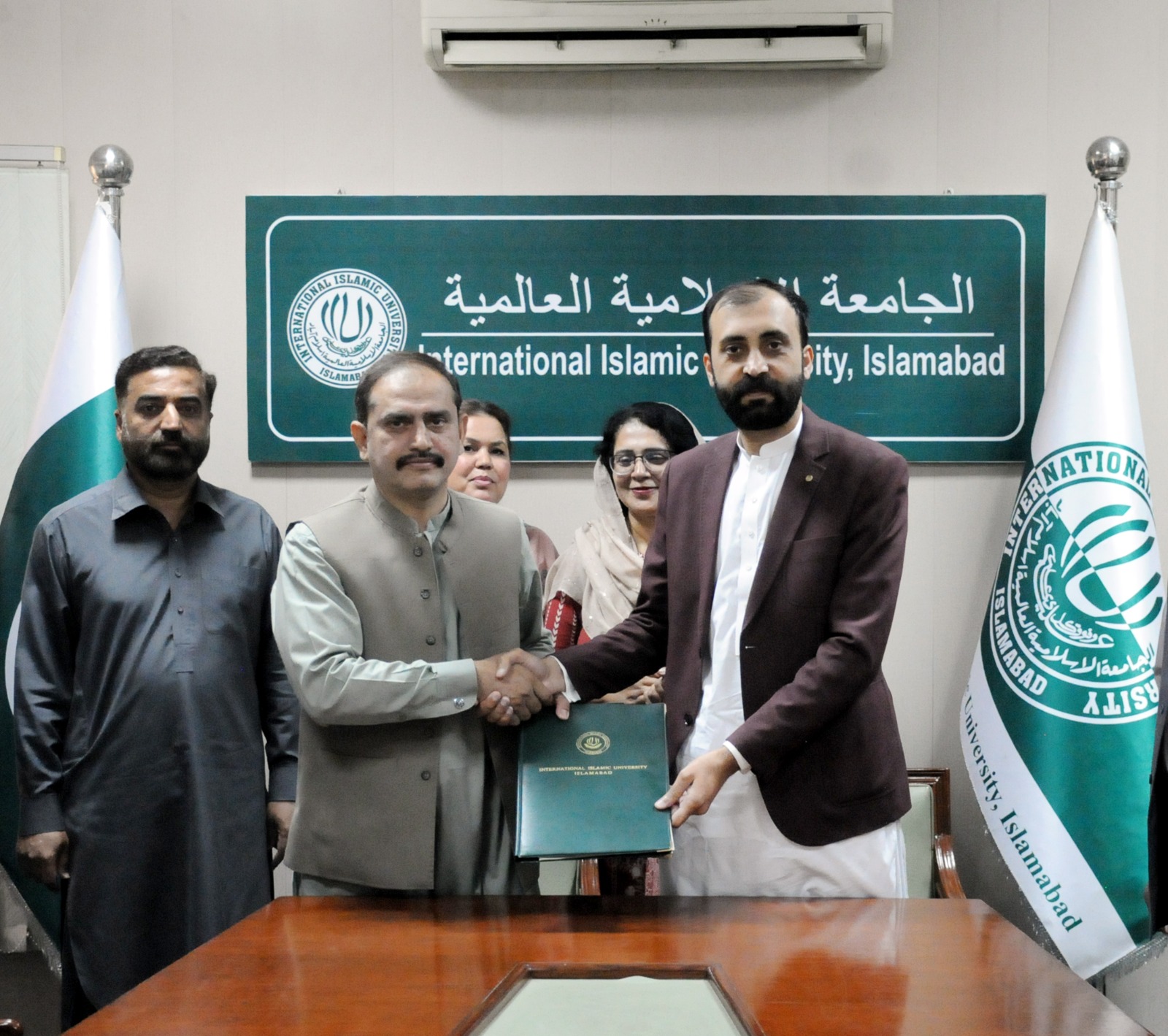
 The International Islamic University Islamabad (IIUI) has signed a Memorandum of Understanding (MoU) with EnviroCare Waste Management to implement an efficient, structured waste collection and disposal system across its campus.
 The initiative marks a crucial step in IIUI’s ongoing efforts to promote environmental responsibility and aligns with the United Nations Sustainable Development Goals (SDGs), particularly SDG 11 (Sustainable Cities and Communities), SDG 12 (Responsible Consumption and Production), and SDG 14 (Life Below Water).
 This collaboration is not just about managing waste but also about instilling a broader commitment to environmental conservation on the part of the university.
Dr. Inaam ul Haq, Director Administration, along with Ms. Zara Shah, In-Charge Estate Management, signed the MoU on behalf of IIUI, while Omer Iqbal, CEO of EnviroCare Waste Management, represented the firm.
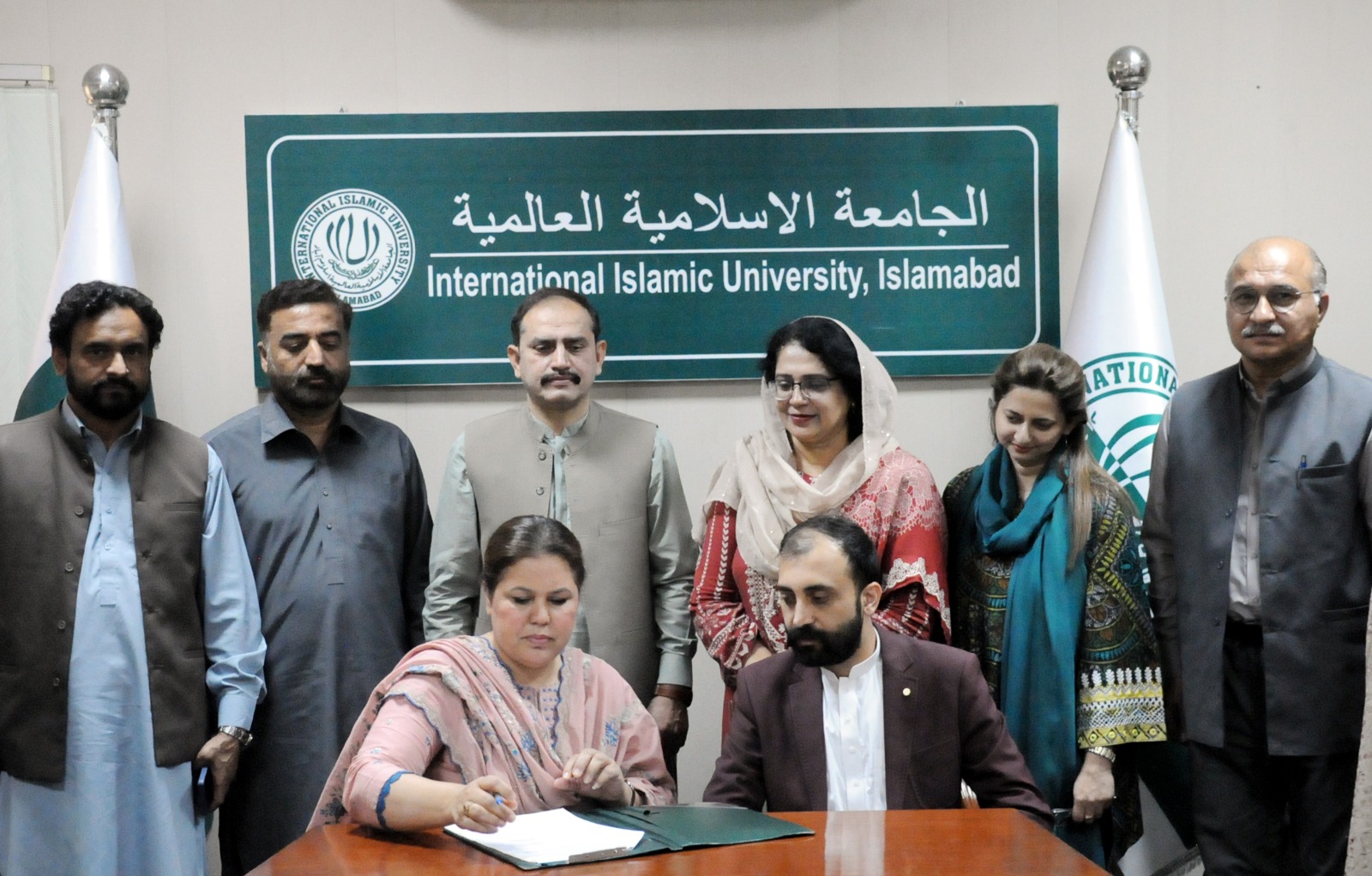 The signing ceremony was attended by Dr. Amna Mehmood, In-Charge (Female Campus); Mr. Sajjad Siddiqui, Chairman of the Waste Management Committee; Mr. Noor Hussain, Director Finance; Mr. Ateeq ur Rahman Chughtai, Director HR; Dr. Asma Mansoor, In-Charge Protocol and Public Relations; Dr. Maria Ali, Chairperson of the Department of Environmental Sciences; Dr. Abrar Shinwari, Provost (Male Campus); Ms. Zara Shah, In-Charge Estate Management; Superintendent Sohaib Qureshi; and other key officials.
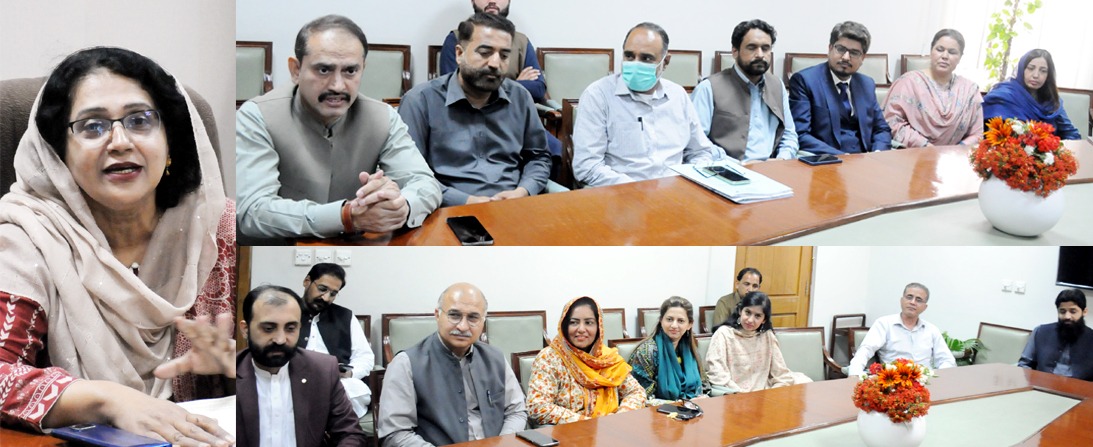
Speaking at the ceremony, Dr. Inaam ul Haq reaffirmed IIUI’s commitment to sustainability, emphasizing that this partnership is not just about improving waste collection but about fostering a culture of responsible waste disposal and recycling within the university. He noted that sustainability is not an isolated concern but one that intersects with broader environmental and public health challenges. He also announced the launch of an olive plantation campaign at IIUI in the coming days, further reinforcing the university’s dedication to eco-friendly initiatives and long-term environmental conservation.
Dr. Inaam acknowledged the efforts of the estate management team, in formalizing the MoU and ensuring that sustainability remains central to IIUI’s institutional policies. He also praised the support of President Prof. Dr. Ahmed Shuja Syed and Vice President Prof. Dr. Abdul Rehman in advancing IIUI’s sustainability initiatives. He emphasized their pivotal role in prioritizing structured waste management and long-term environmental conservation at the university.
Omer Iqbal described the collaboration as both an honor and a shared responsibility, stating that partnering with an academic institution like IIUI adds meaning to the effort of advancing sustainable waste management. He expressed hope that this initiative would lead to long-term environmental benefits and serve as a model for other institutions.
Dr. Amna Mehmood emphasized the importance of sustainability in campus life, highlighting IIUI’s commitment to a cleaner and greener environment. She encouraged student and faculty participation in waste reduction efforts and expressed confidence that this collaboration would set an example for other institutions.
Through structured waste management strategies and a clear focus on sustainability, IIUI is taking a key step forward not only in aligning its ventures with the SDGs but also in actively contributing to environmental conservation and protection—an especially critical move in the face of rampant climate change.