

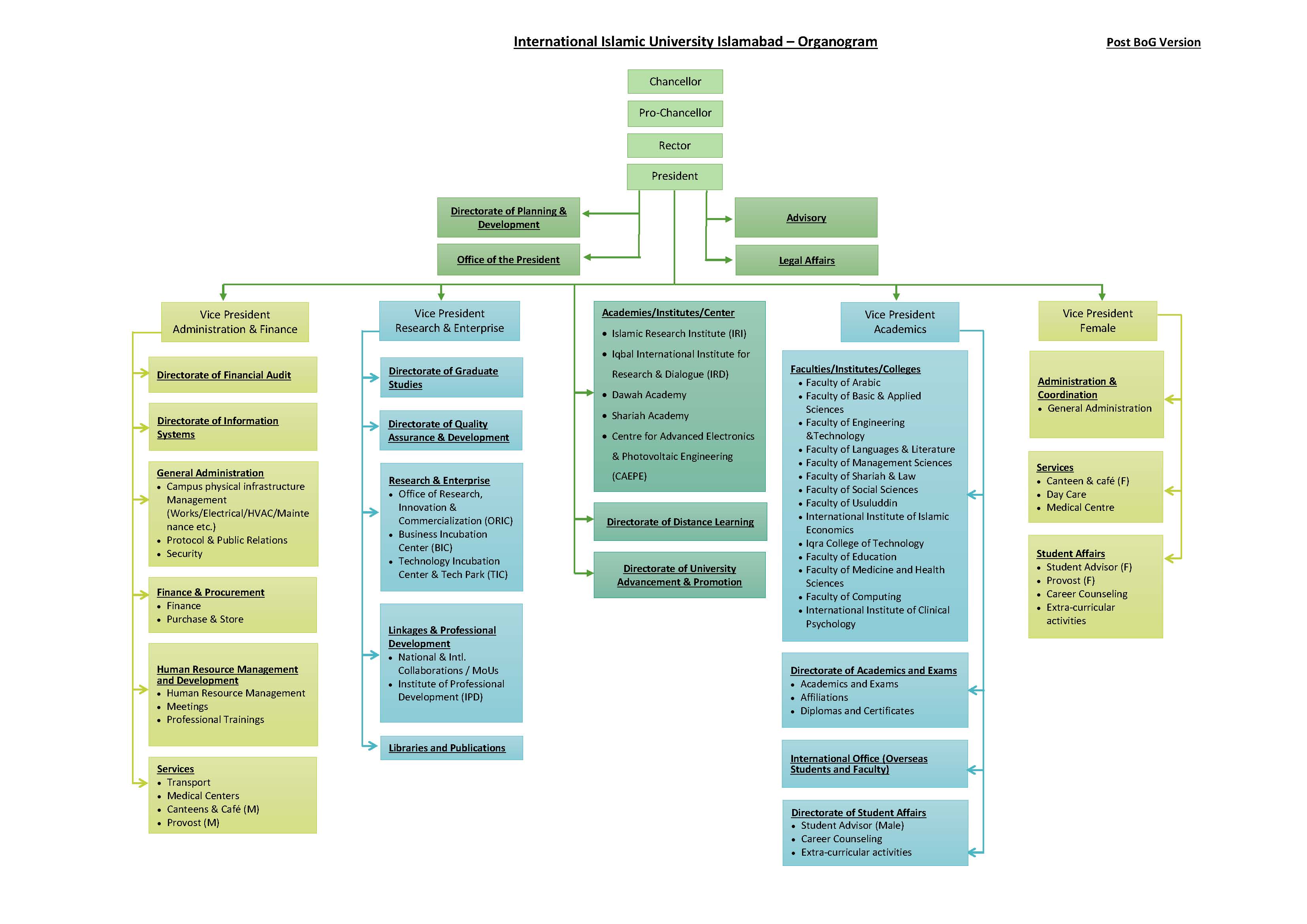
 The International Islamic University Islamabad (IIUI) held the fourth meeting of the Institutional Quality Circle (IQC) to review key quality assurance initiatives and preparations for the upcoming Institutional Performance Review (IPR) visit facilitated by the Higher Education Commission (HEC). The meeting was convened by Prof. Dr. Ahmed Shuja Syed, Vice President (Research & Enterprise), IIUI.
The IQC serves as a broad-based institutional forum that brings together key stakeholders from across the University, including deans, directors, vice presidents, and representatives of academic and administrative units, reflecting a participatory approach to governance, quality enhancement, and institutional development. 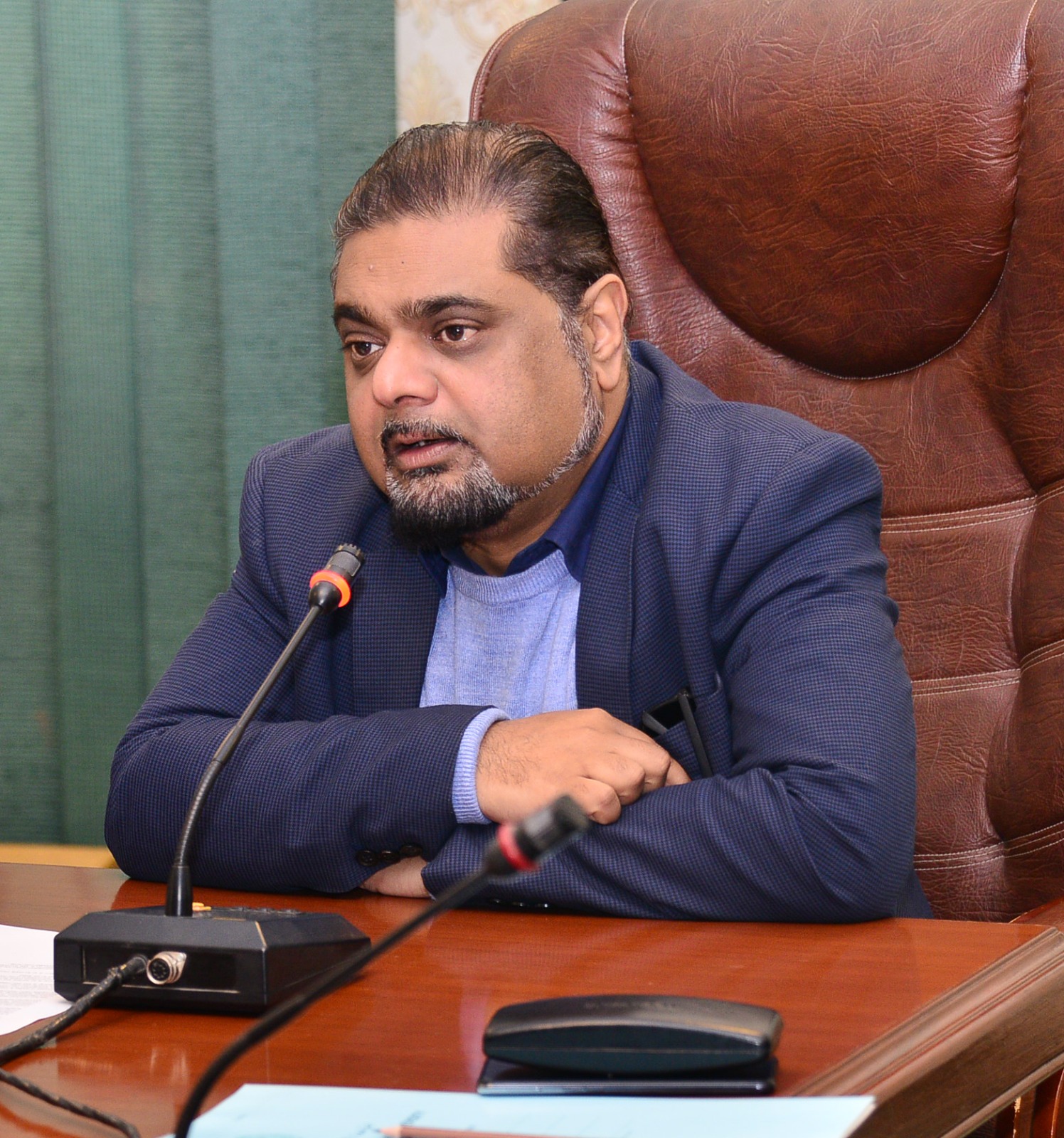
The meeting also marked the completion of the annual quality assurance cycle in line with HEC quality assurance and governance policies, under which Institutional Quality Circles are required to meet on a quarterly basis. Participants reviewed progress achieved during previous meetings to assess implementation, close the quality loop, and set directions for the coming year.
A detailed review of action points from earlier sessions was conducted, and progress reports submitted by various committees were examined to identify achievements, gaps, and areas requiring further attention. Committees constituted in earlier meetings also presented updates on internal reviews, preparatory exercises, and recommendations aimed at strengthening institutional readiness.
 A major focus of the meeting remained preparations for the forthcoming IPR visit. Participants discussed measures to strengthen coordination across departments and to ensure active engagement of all stakeholders, including students, faculty members, and officers. Particular emphasis was placed on reactivating and supporting committees already working on the sixteen quality standards.
To further enhance preparedness, a committee has been constituted to conduct a structured mock review in line with HEC expectations. The findings of this exercise will be compiled into a report to be presented to the University leadership, and a special session of the IQC will be convened to review the findings and implement necessary corrective measures.
An important outcome of the meeting was the formal approval of IIUI’s Quality Policy (Version 1.0). Developed through a consultative process with the involvement of relevant stakeholders, the policy reflects a student-centred approach to quality assurance and aligns with national quality standards and emerging requirements in the higher education sector. The approval of this policy represents a significant institutional milestone, as comprehensive quality frameworks of this nature are still evolving across many universities.
The meeting also highlighted evolving national directions in higher education quality assurance, which increasingly emphasize measurable impact, effectiveness, and institutional ownership rather than documentation alone. In this context, participants discussed strengthening ownership of quality processes across academic and administrative leadership, clearly defining responsibilities, and ensuring that quality assurance mechanisms translate into tangible improvements in teaching, research, learning outcomes, governance, and faculty development.
 Participants further reflected on the importance of Continuous Quality Improvement (CQI), guided by the Plan–Do–Check–Act (PDCA) model, and reviewed progress achieved under this framework while outlining forward planning to sustain ongoing improvement.
It was also noted that, in accordance with HEC guidelines, the recommendations and decisions of the IQC will be presented before relevant statutory forums, including the Board of Governors, to ensure institutional accountability and effective follow-up on implementation.
The meeting emphasised the growing significance of the Institutional Quality Circle in light of new performance and quality standards introduced in Pakistan’s higher education sector, where universities are increasingly required to demonstrate effectiveness, impact, and stakeholder engagement.
The discussions reaffirmed IIUI’s commitment to strengthening governance, enhancing academic excellence, advancing research, and aligning institutional practices with evolving higher education quality frameworks. The University reiterated its resolve to continuously improve its performance across all facets of higher education in pursuit of institutional excellence.