

Pakistan Embodies the Vision of Iqbal and the Struggle of Muhammad Ali Jinnah as a Unique and Successful Historical Experience, States His Grace Archbishop Rowan Williams
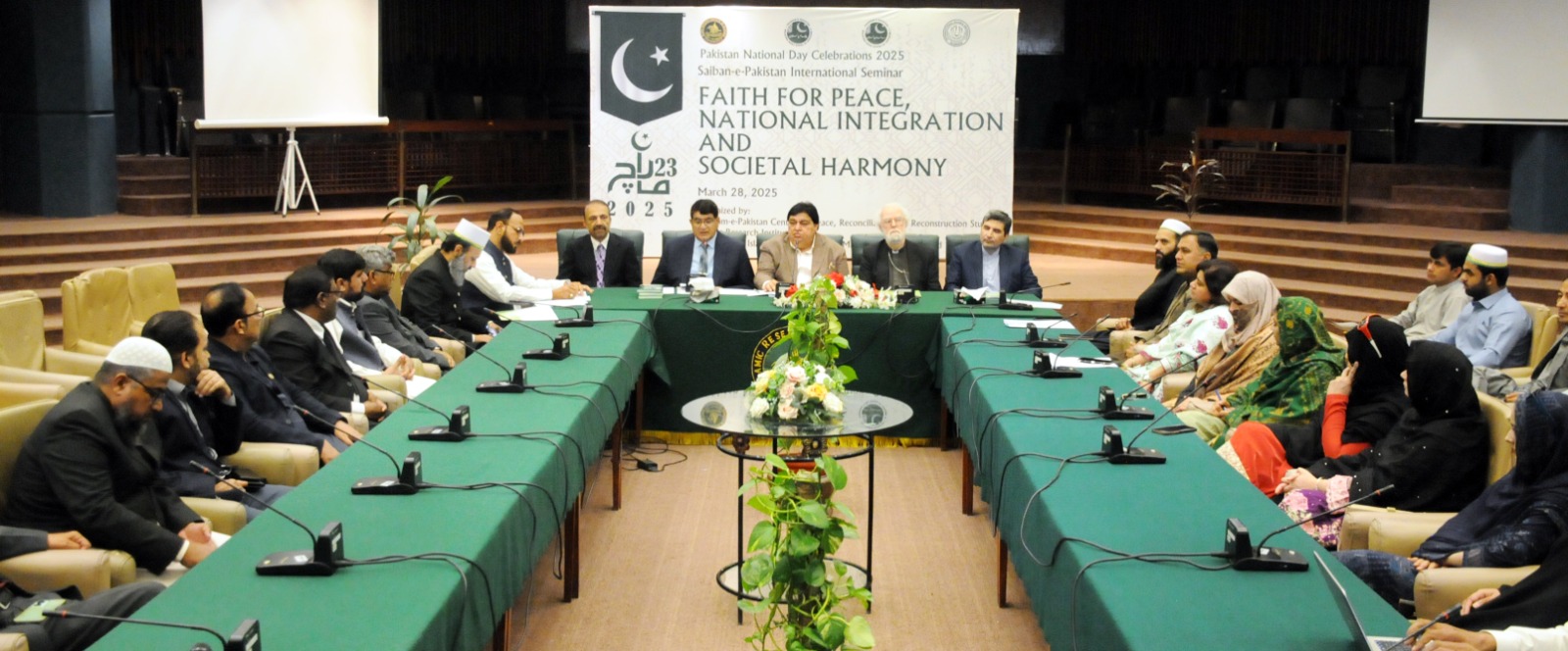
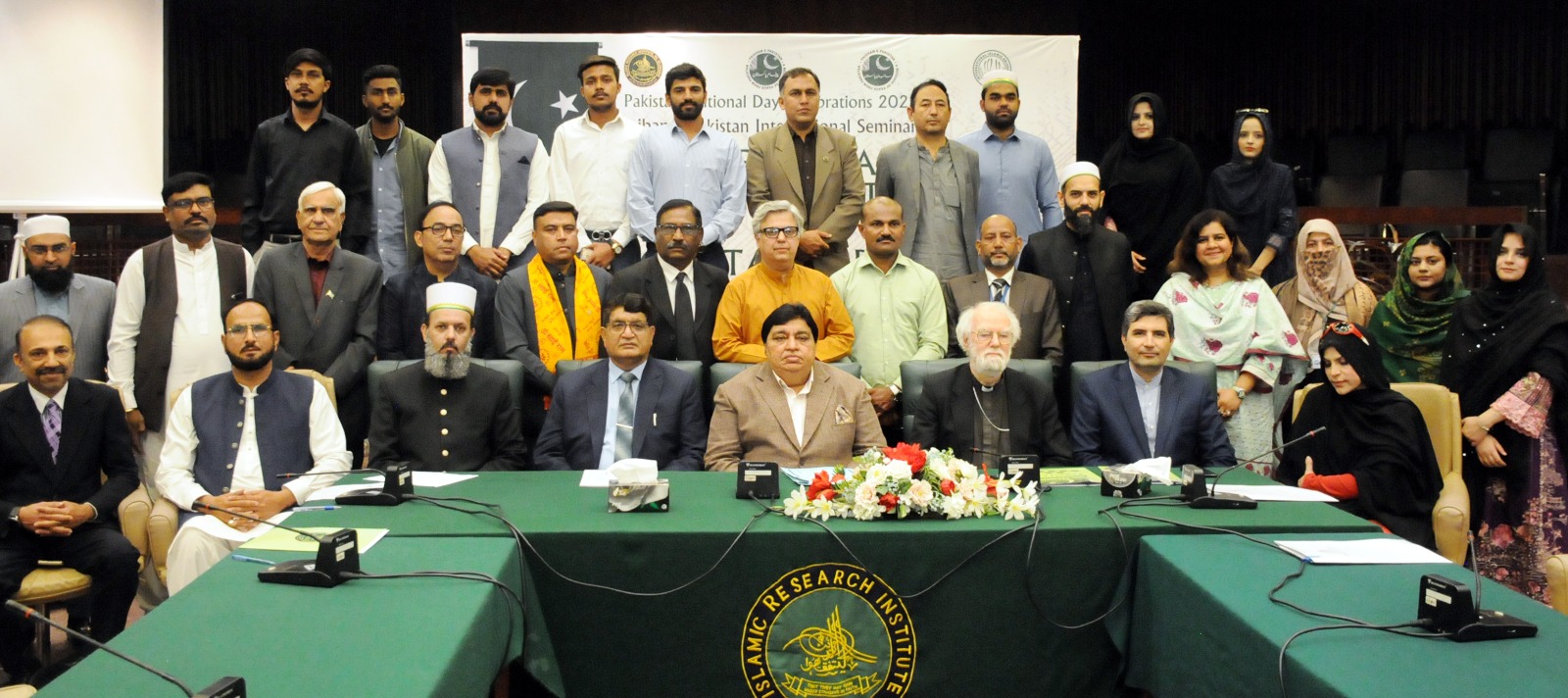
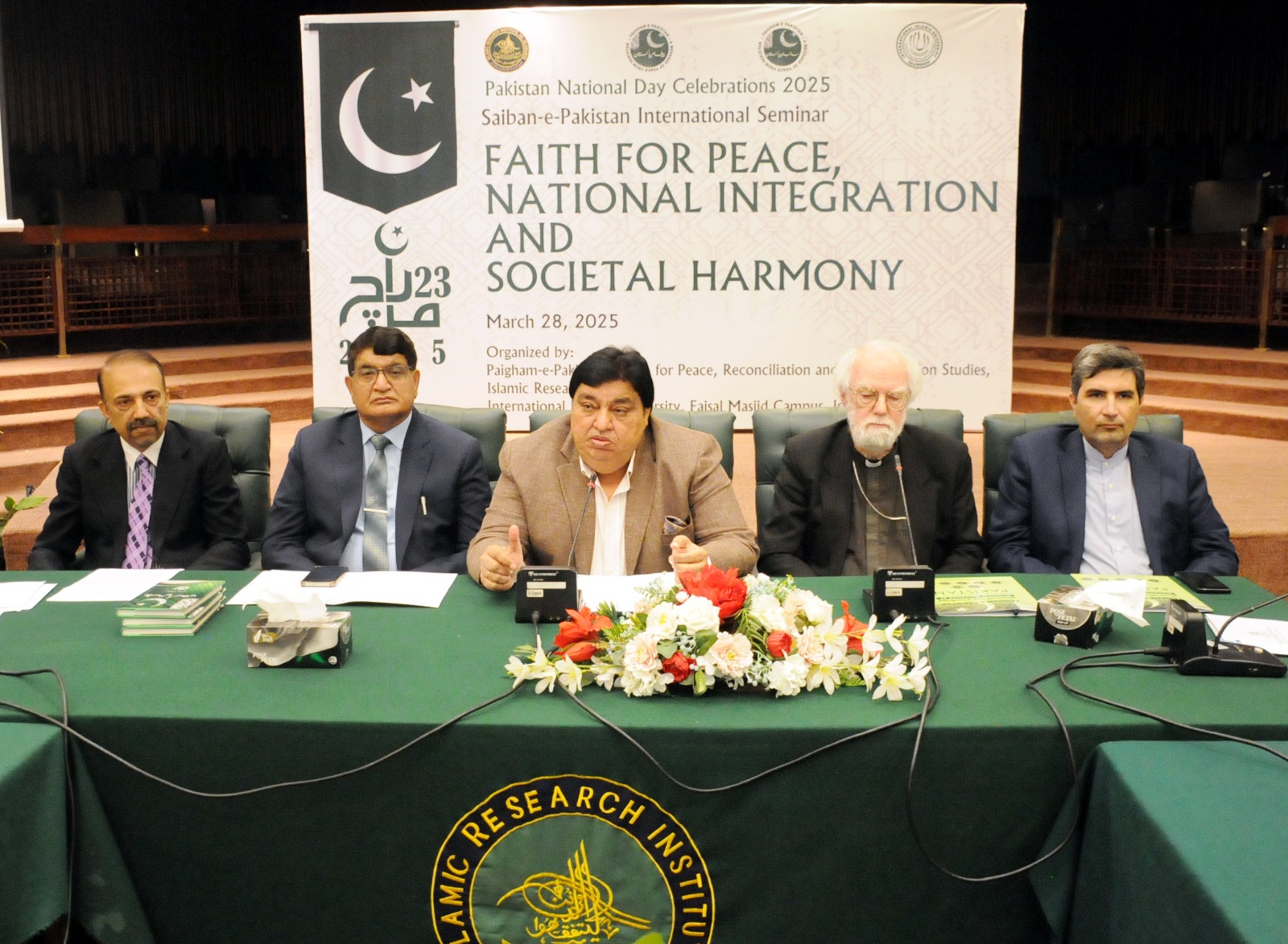 The Paigham-e-Pakistan Center for Peace, Reconciliation, and Reconstruction Studies, in collaboration with the Islamic Research Institute, International Islamic University Islamabad (IIUI), organized the Saiban-e-Pakistan International Seminar on “Faith for Peace, National Integration, and Societal Harmony” on March 28, 2025, at the Allama Iqbal Auditorium, Faisal Masjid, Islamabad. The event was held as part of the Pakistan National Day celebrations.
Mr. Kesoo Mal Khael Das, Minister of State for Interfaith Harmony, Government of Pakistan, presided over the seminar, while the distinguished Chief Guest was His Grace Archbishop Rowan Williams, the former Archbishop of Canterbury. Archbishop Williams, a renowned theologian, served as the 104th Archbishop of Canterbury from 2002 to 2012. Before his tenure, he held various academic and ecclesiastical positions, including a professorship of divinity at Oxford (1986–92). Throughout his career, he has worked to foster interfaith dialogue and address issues of religious coexistence. In 2008, he proposed incorporating aspects of Sharīʿah (Islamic law) within the English legal system to enhance social cohesion, arguing that some Muslims might prefer addressing financial and marital matters in Sharīʿah courts rather than secular courts.
 Prof. Dr. Muhammad Zia-ul-Haq, Director General of the Islamic Research Institute, welcomed the guests and emphasized the importance of bringing together faith leaders, scholars, and practitioners to engage in meaningful discussions on the role of religion in fostering peace, unity, and social harmony. He highlighted that as religious conflicts, political instability, and societal divisions continue to rise globally, this seminar aimed to explore how various faith traditions can serve as bridges for understanding, national integration, and peaceful coexistence in increasingly diverse societies.
 He also pointed out Pakistan’s significant geopolitical and strategic position at the crossroads of South Asia, the Middle East, Central Asia, and China. However, he noted that ideological uncertainty has hindered efforts to trace the country’s historical roots. He reiterated that Pakistan’s history is deeply connected to the Indus Civilization, whose people were self-reliant and resilient against external influences. Although the inhabitants of the Indus Valley embraced Islam, Sufi traditions influenced the understanding of Sharīʿah. He emphasized the importance of approaching historical narratives with an analytical and thoughtful bent of mind.
Dr. Mehdi Taheri, Cultural Attaché of Iran, reflected on Allama Muhammad Iqbal’s intellectual contributions and his role in shaping the idea of Pakistan for the Muslims of the subcontinent.
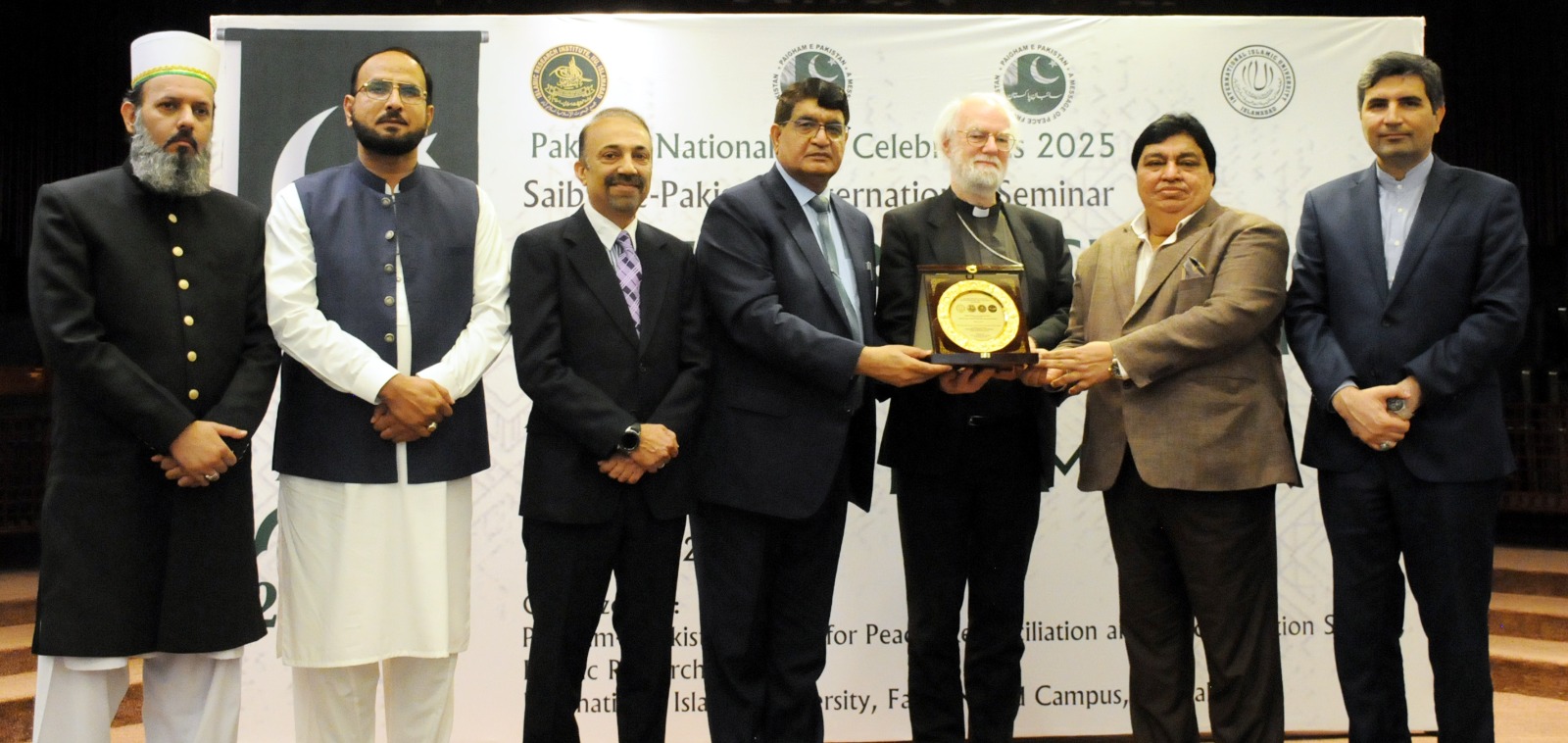 The seminar featured a keynote address by His Grace Archbishop Rowan Williams, who elaborated on the profound impact of faith in guiding both individual and collective actions toward peace. In his insightful speech, he discussed the role of religious belief in peacebuilding and community resilience. Acknowledging the serious challenges Pakistan faces, he praised the country’s inspiring history and potential. He described Iqbal and Muhammad Ali Jinnah as two of the greatest figures in modern Islamic history, highlighting Pakistan’s honor in being the birthplace of such exceptional leaders. According to Archbishop Williams, building a strong society requires vision, commitment, and faith. He further emphasized that religious diversity plays a crucial role in fostering peace, underscoring that “No one is secure until everyone is secure.”
Chairing the event, His Excellency Mr. Kesoo Mal Khael Das commended the efforts of the Islamic Research Institute and IIUI in organizing workshops and panel discussions that provide participants with interactive opportunities to explore practical strategies for achieving societal harmony and strengthening national unity. On behalf of the Ministry of Religious Affairs and Interfaith Harmony, he welcomed His Grace to Pakistan. He reiterated that national integration serves as a unifying force that fosters a sense of belonging among diverse individuals and groups within society.
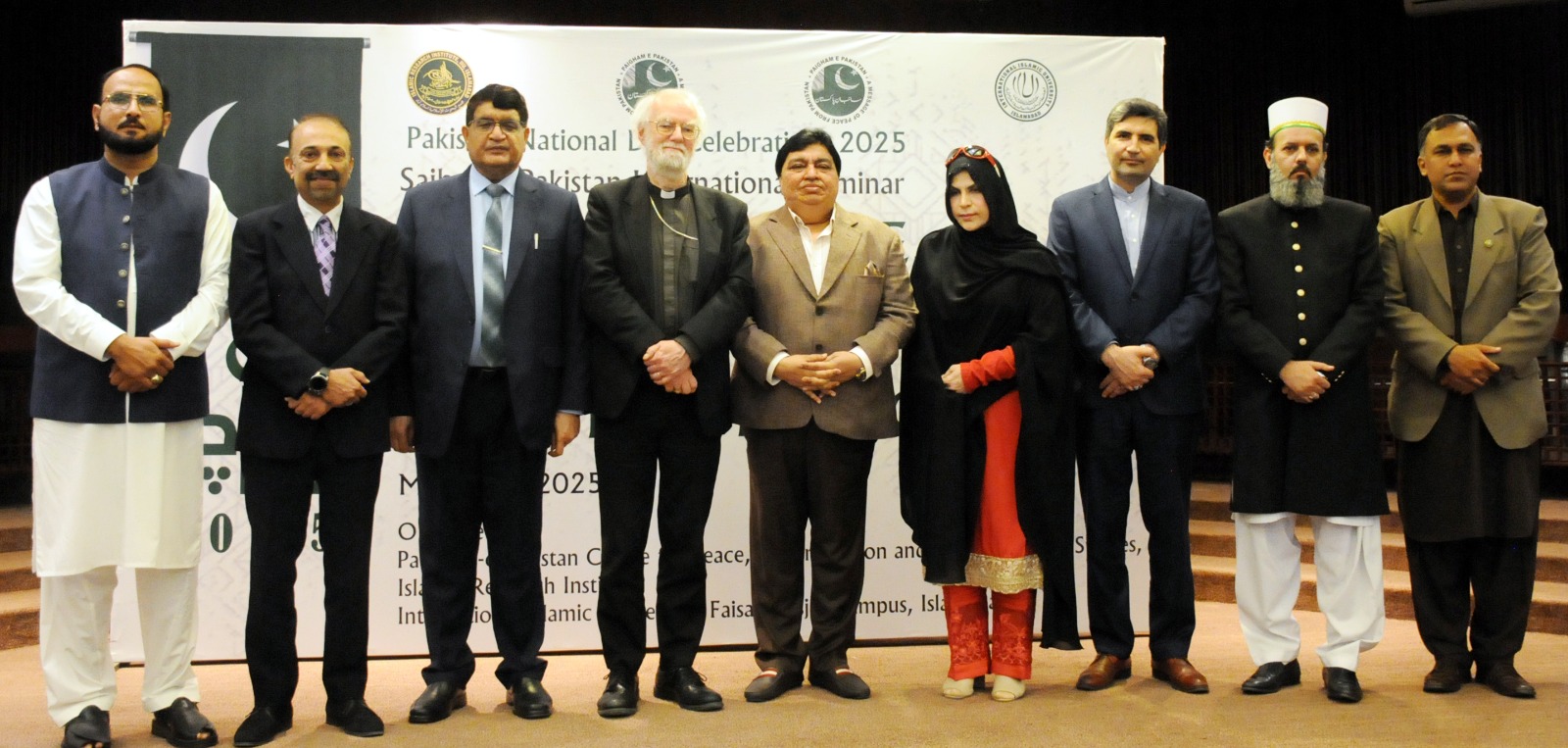 The seminar also featured addresses from other notable speakers, including Syeda Khanum Tayyaba Bukhari, a prominent religious scholar, as well as faculty members, officers, students, and faith leaders from various religious traditions.
The event concluded with a vote of thanks delivered by Dr. Syed Ghufran Ahmed, Students’ Advisor at IIUI. Dr. Aftab Ahmed moderated the session, while Dr. Muhammad Ajmal recited verses from the Holy Quran, and Rev. Rana Youab read passages from the Bible.