
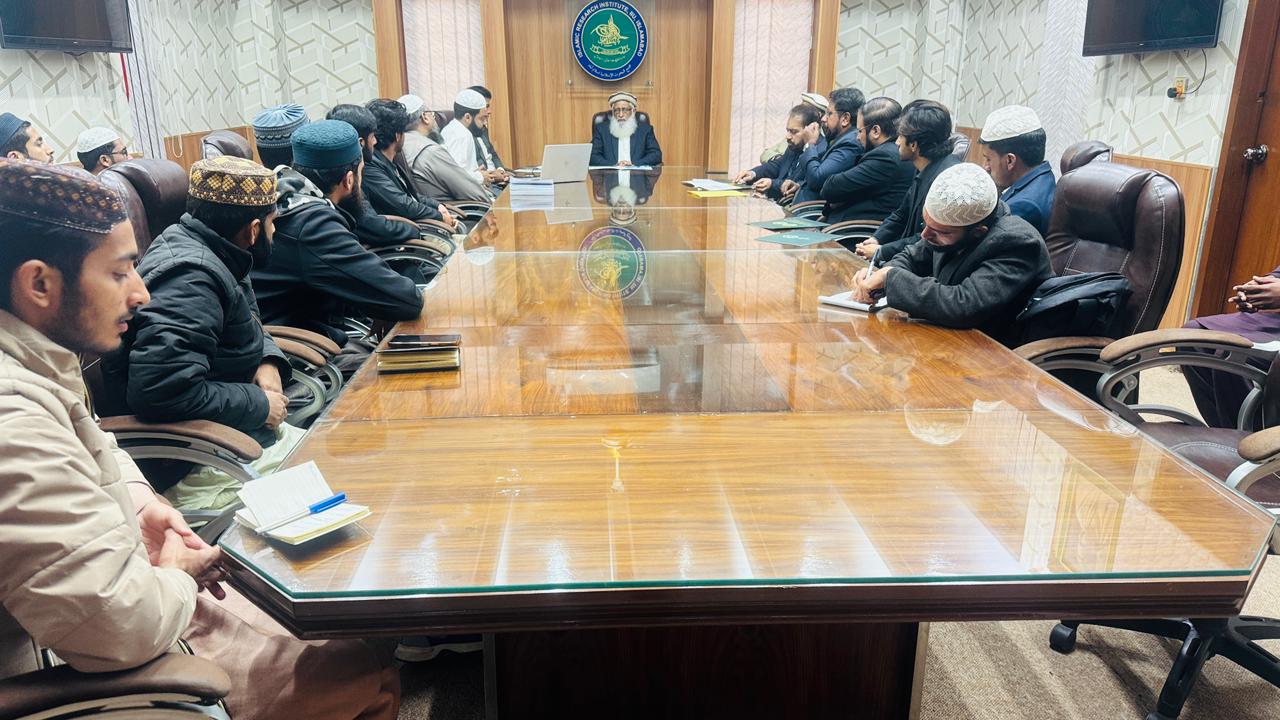
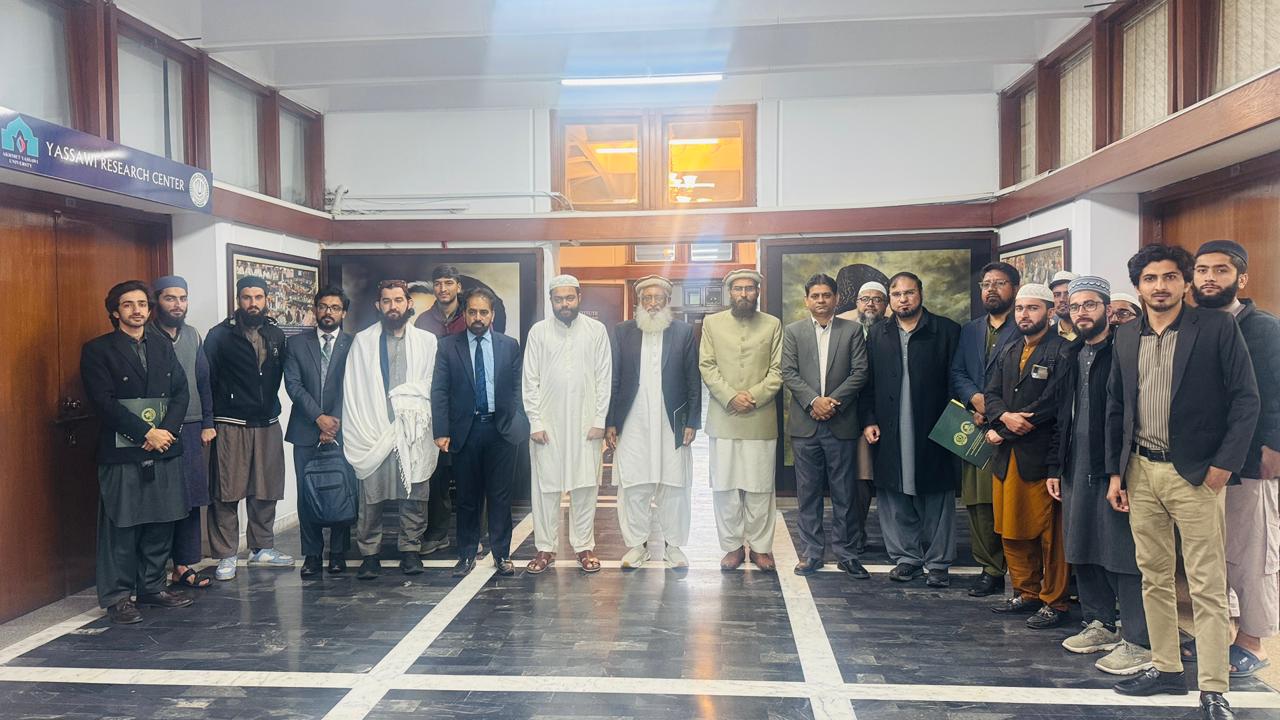
 The International Centre of Excellence for Sirah Studies (ICESS) at the Islamic Research Institute (IRI), International Islamic University Islamabad, organised an extension lecture titled “The Ṣūfī Interpretation of the Sīrah of the Holy Prophet (PBUH) in the Thought of Shāh Walīullāh Dehlvī.” The lecture, held at the Dr. Ẓafar Isḥāq Anṣārī Board Room, Faisal Masjid Campus, brought together faculty members, researchers, and postgraduate students to explore the intellectual and spiritual dimensions of Sīrah studies within the Indo-Muslim scholarly tradition.
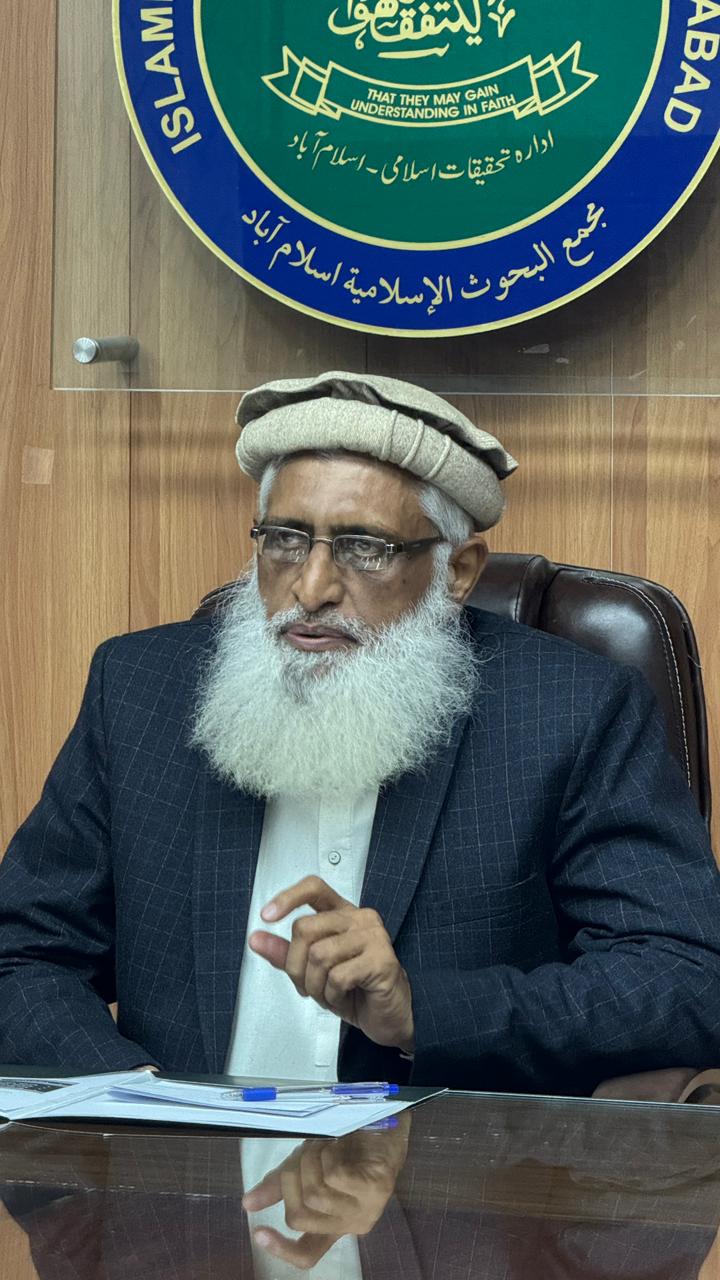
The lecture was delivered by Prof. Dr. Mufti Saeed Ur Rehman, Dean, Faculty of Humanities, University of Southern Punjab, and former Chairman, Department of Islamic Studies, Bahauddin Zakariya University, Multan. Opening the session, Dr. Muhammad Ahmad Munir, Head, Department of Fiqh & Law, IRI, highlighted the continued relevance of classical Muslim scholarship in addressing contemporary intellectual challenges.
Prof. Dr. Saeed described Shāh Walīullāh Dehlvī as a unifying scholarly figure in South Asian religious history, whose work integrated jurisprudence, ḥadīth, Qur’ānic exegesis, taṣawwuf, and socio-political reform. He explained that Shāh Walīullāh viewed the Sīrah of the Holy Prophet (PBUH) as a transformative model aimed at spiritual purification (tazkiyah), moral discipline, and civilisational revival aligned with fiṭrah.
He further noted that Shāh Walīullāh’s Ṣūfī perspective emphasised harmony between adherence to Sharīʿah and inward spiritual refinement, presenting a unified methodological approach that promotes ethical leadership and social cohesion.
Discussing Shāh Walīullāh’s metaphysical thought, Prof. Dr. Saeed outlined his concept of three ontological realms: the world of spirits (ʿālam al-arwāḥ), the imaginal realm (ʿālam al-mithāl), and the physical realm (ʿālam al-shahādah). He stated that this framework, reflected in Ḥujjat Allāh al-Bālighah, provides a theological lens for understanding the Prophetic life as both historically grounded and spiritually significant.
The lecture also examined Shāh Walīullāh’s interpretation of the stages of the Prophet’s mission, explaining that the Makkan period focused on spiritual transformation while the Madinan phase institutionalised socio-legal governance. Prof. Dr. Saeed further discussed the concept of Prophetic ijtihad through examples from Ṭibb al-Nabawī, noting that certain Prophetic practices reflected contextual human experience while remaining subject to Divine validation.
The session was moderated by Mr. Azlan Sarwar, Research Assistant, IRI, who facilitated an interactive discussion. Participants raised questions on integrating spirituality into modern research frameworks, reflecting growing academic interest in connecting classical Islamic scholarship with contemporary intellectual discourse.
At the conclusion, participants emphasised the continued relevance of Shāh Walīullāh’s integrative methodology for contemporary Islamic studies.
 IIUI mission is to transform the society by promoting education, training, research, technology, and collaboration for reconstruction of human thought in all its forms on the foundations of Islam.