

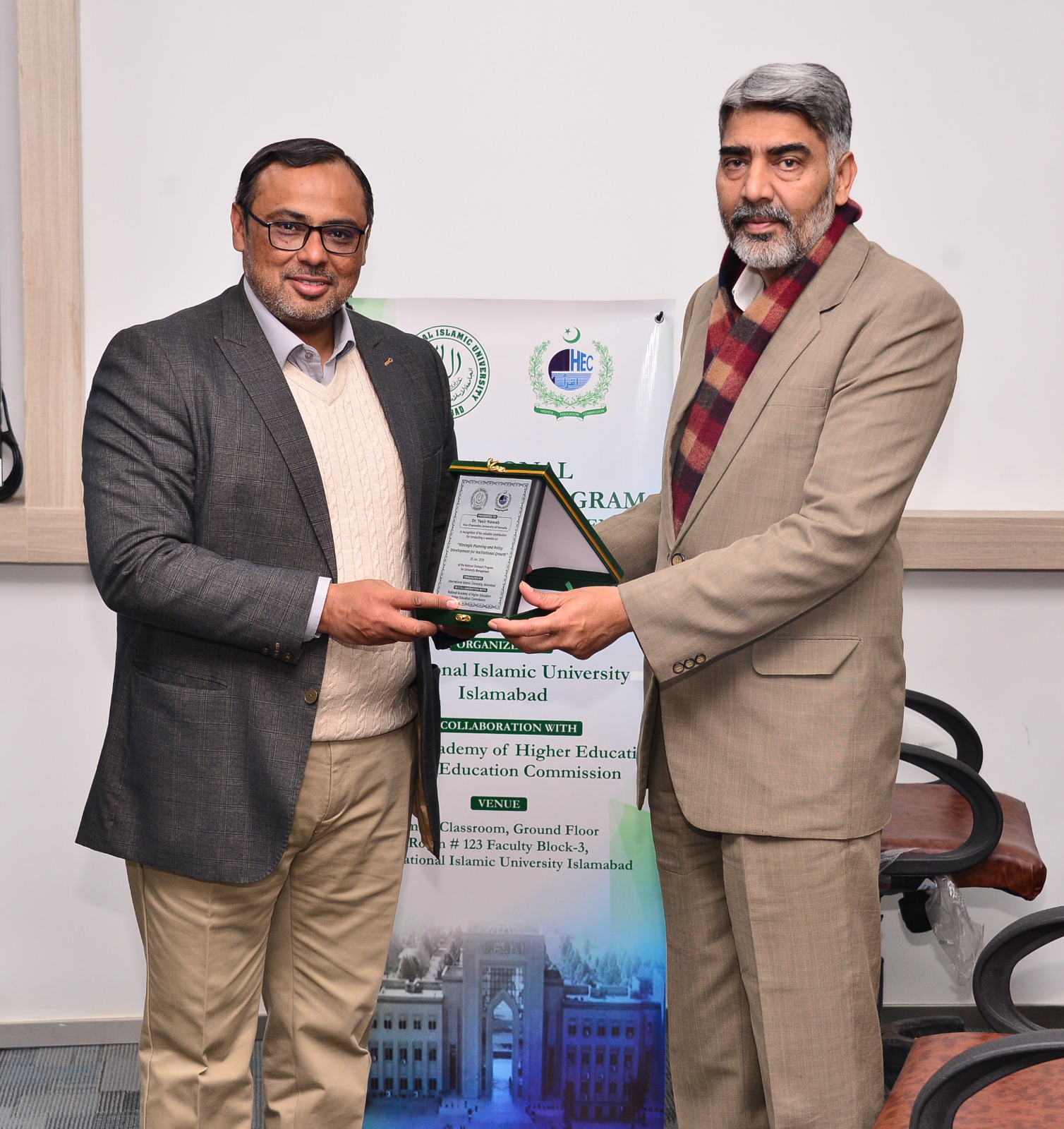
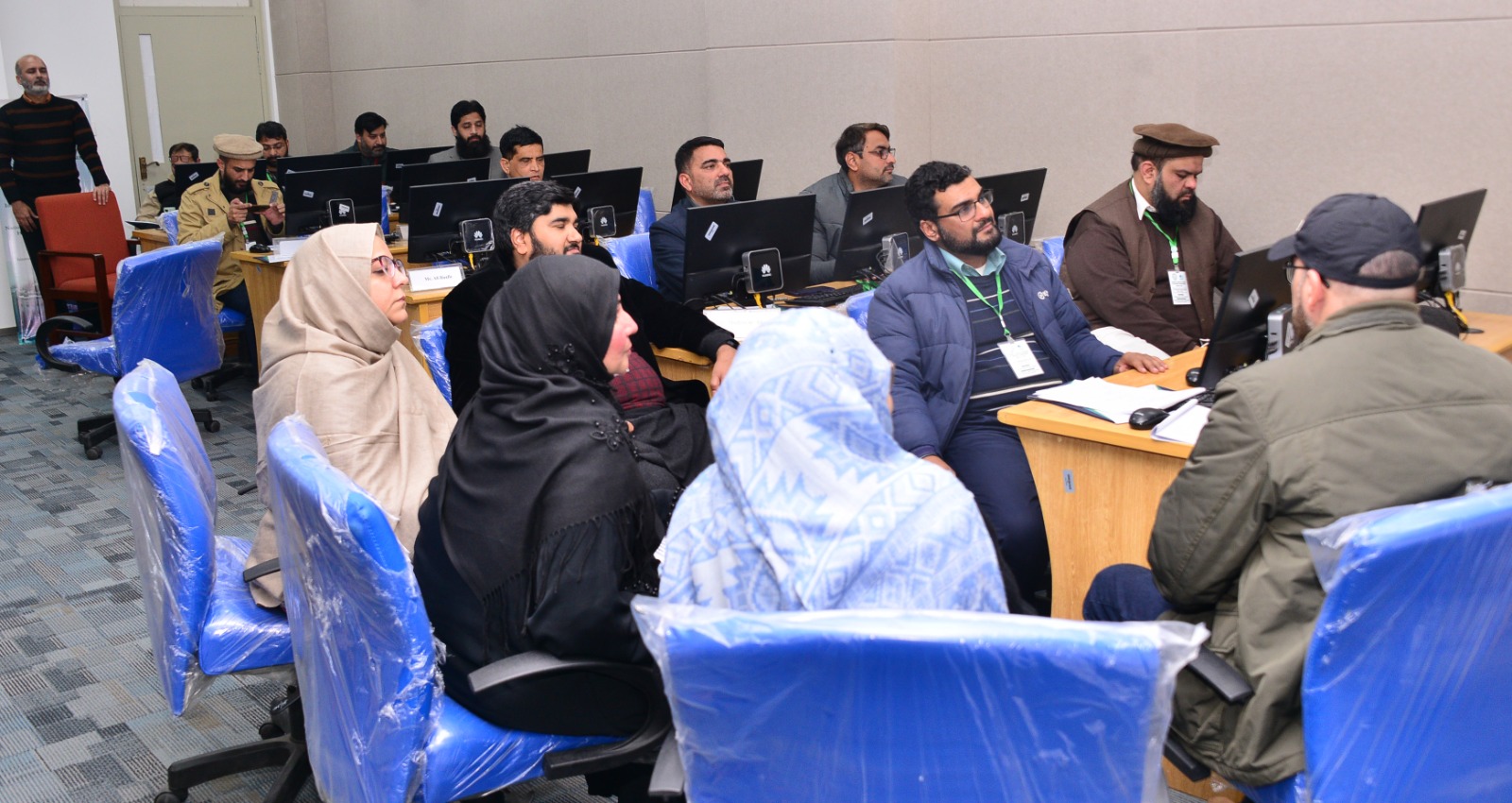
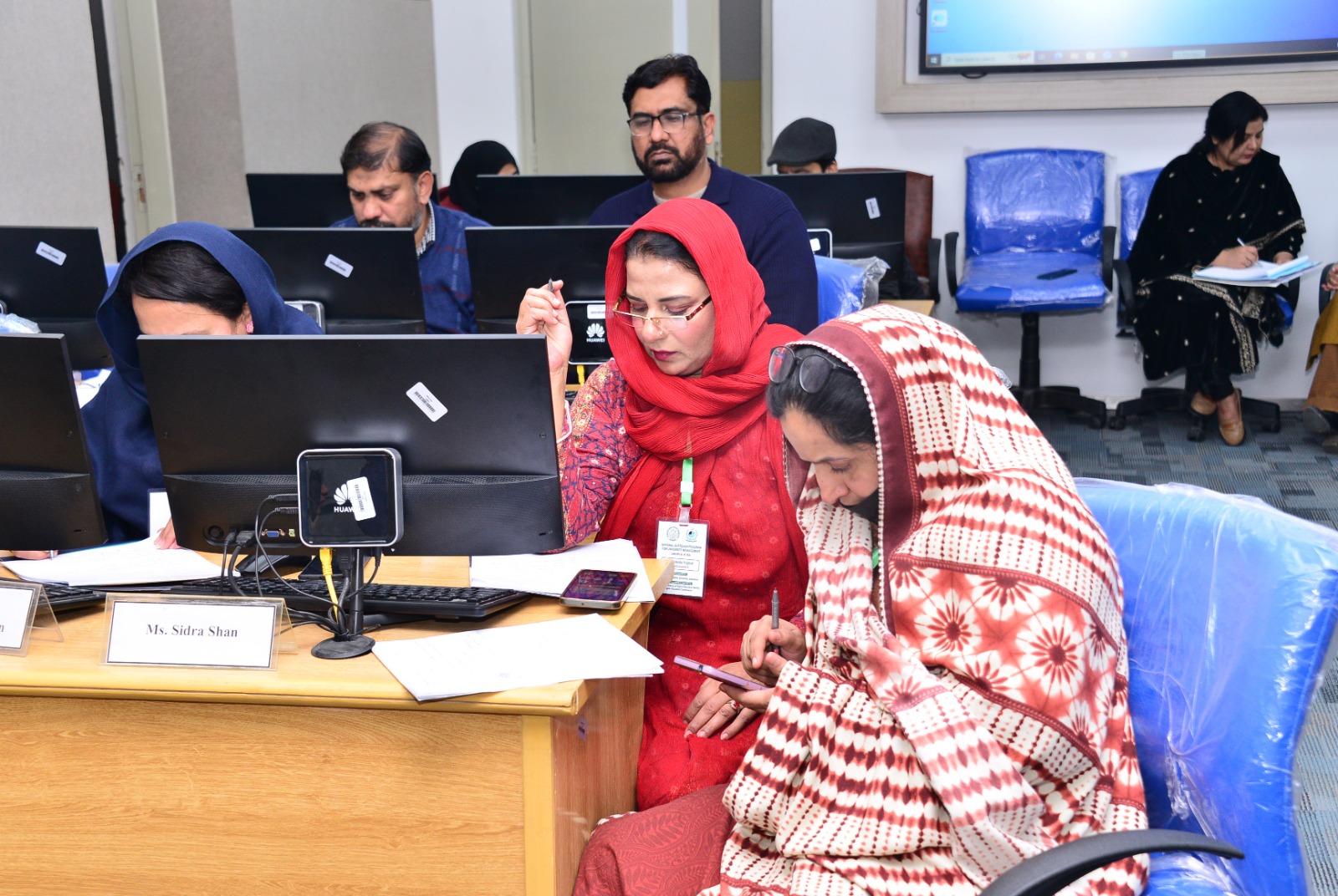
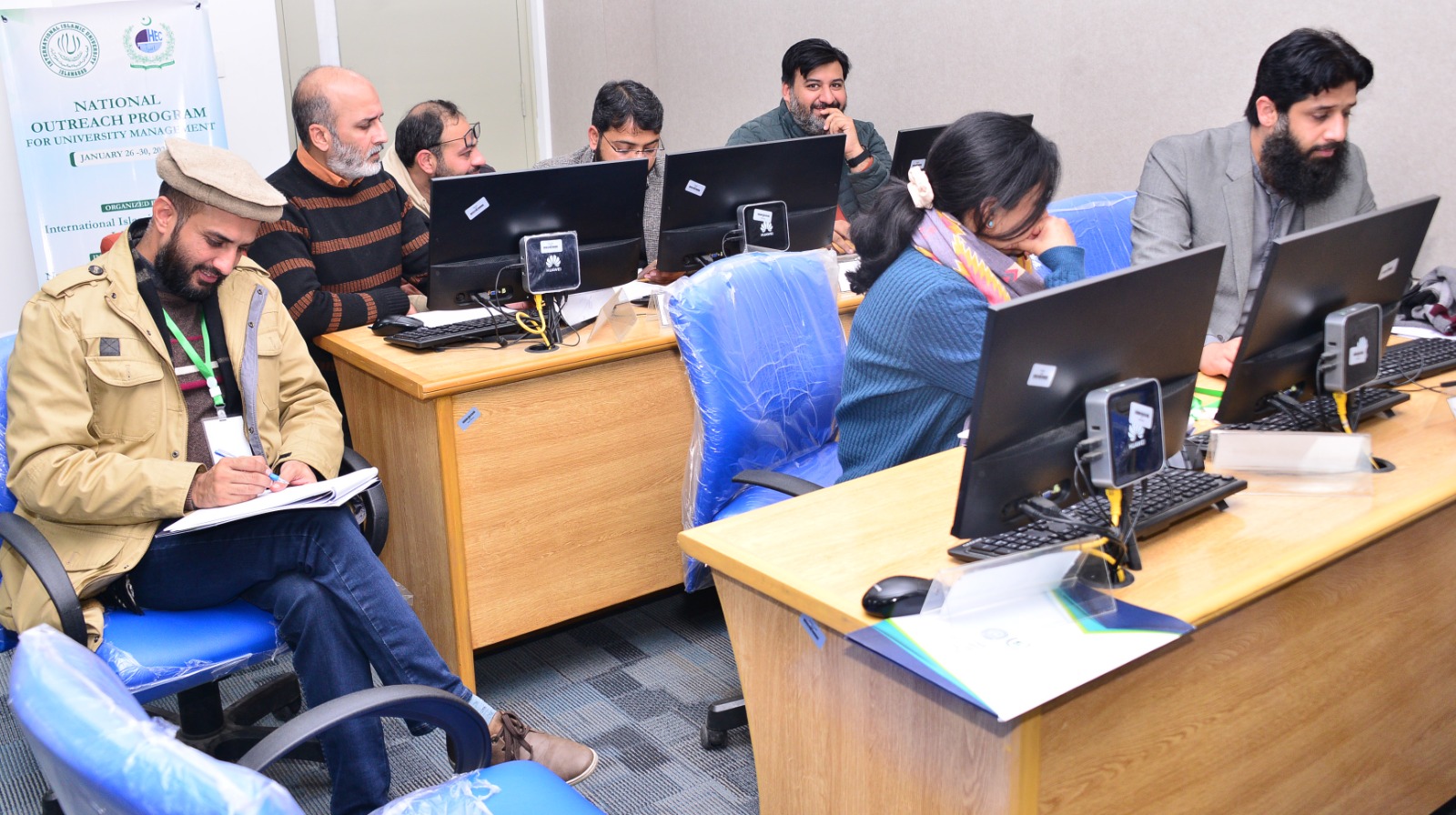
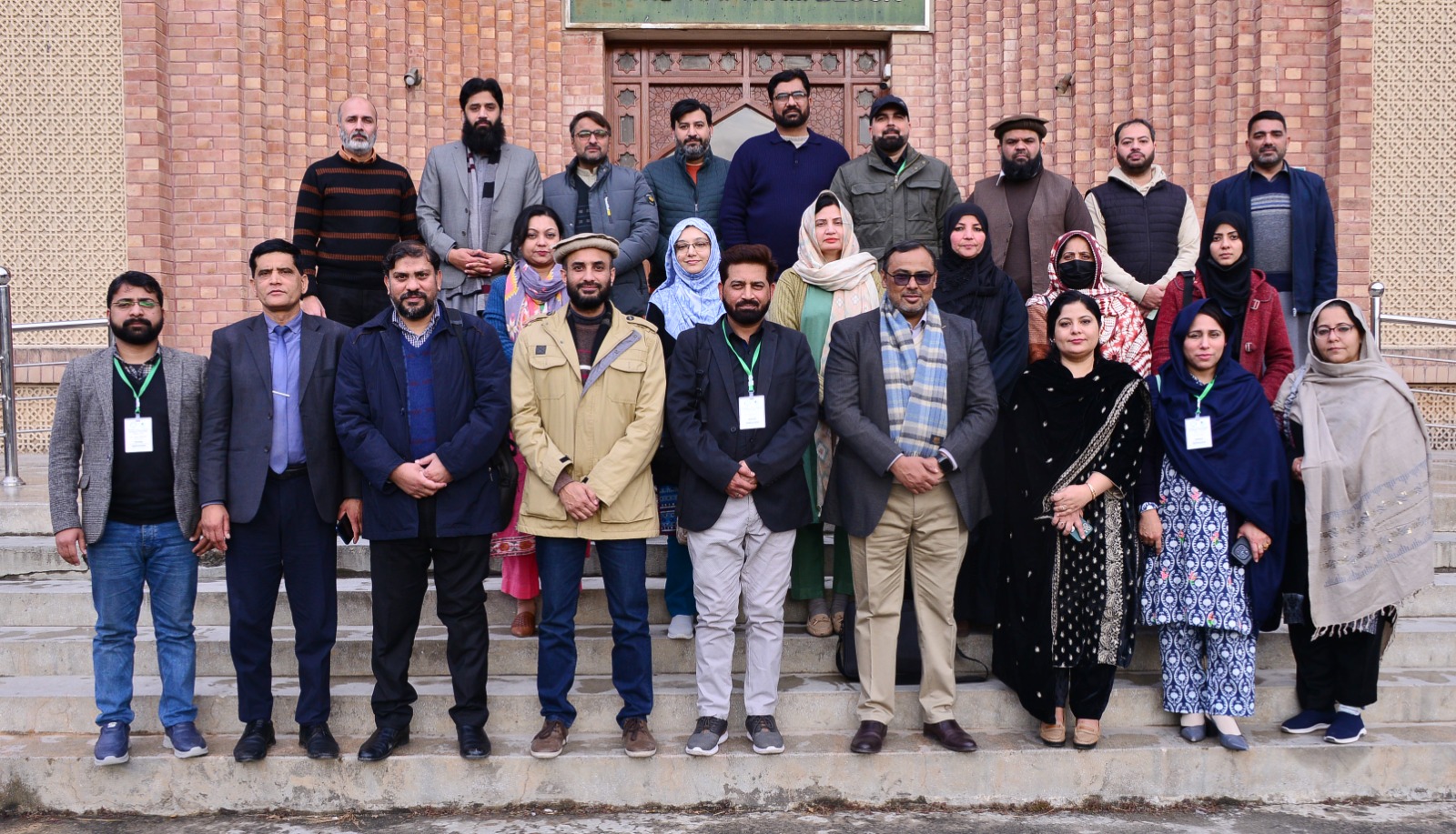
 The International Islamic University Islamabad (IIUI), in collaboration with the National Academy of Higher Education (NAHE), on Tuesday concluded the second day of the National Outreach Program for Higher Education Management with a comprehensive training session on Strategic Planning and Policy Development for Institutional Growth.
The session was led by Prof. Dr. Yasir Nawab, Vice Chancellor, University of Kamalia, who provided a structured overview of university systems and governance, laying the foundation for strategic thinking in higher education institutions. He explained the concepts of vision and mission, and clarified the distinction between strategy and strategic planning, as well as between institutional policies and standard operating procedures.
Prof. Dr. Yasir Nawab emphasized team-based planning and highlighted the use of SWOT analysis as a key tool for assessing institutional strengths, weaknesses, opportunities, and threats. He guided participants on translating SWOT analysis into actionable strategies through the use of SWOT matrices, strategic prioritization, clearly defined objectives, and measurable key performance indicators (KPIs).
The session further focused on aligning strategy with policy and operational systems. The role of policies in shaping institutional behavior was discussed, along with the alignment of key functional areas including human resources, finance, examinations, ORIC, and information technology with overall institutional strategy. Clear assignment of responsibilities and accountability mechanisms were emphasized for effective implementation.
Highlighting continuous improvement, the resource person discussed the use of KPIs, dashboards, departmental scorecards, and review meetings, and stressed the importance of the Plan-Do-Check-Act (PDCA) cycle across academic and administrative functions.
Prof. Dr. Yasir Nawab also underlined the need for a global strategic outlook, financial sustainability, and governance reforms in public sector universities. Measures such as budget rationalization, controlled employment practices, strengthened internal controls, digitalization, and effective utilization of government funding were identified as key to improving efficiency and reducing operational delays. The importance of international collaboration, digital infrastructure, team building, and effective communication was also emphasized.
The session concluded with a focus on integrated strategic planning, policy alignment, and sustainable governance as essential drivers of long-term institutional growth and excellence in higher education.